







Before You Pilot a Robot Workforce: What the Latest Physical AI Research Tells Enterprise Decision-Makers About Readiness and Risk

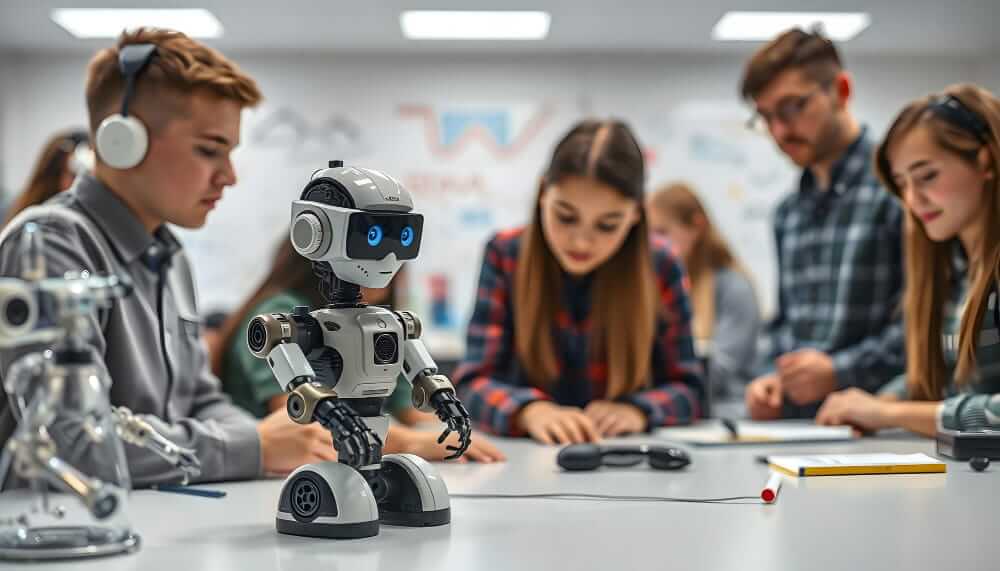
Enterprise leaders evaluating physical AI investments in 2026 are navigating a market where vendor demonstrations are increasingly impressive and production reliability is still catching up. The research coming out of leading robotics labs is genuinely advancing the field, but the gap between what works in a controlled environment and what holds up across a factory floor or distribution centre remains material. Understanding where that gap sits, and why it exists, is the prerequisite for making a sound build-vs-buy decision.
Companion piece to our broader work on physical AI deployment readiness. See Physical AI Deployments: Why Robots Fail Where Software Succeeds for a technical breakdown of why VLA systems break in production and what that means for enterprise infrastructure planning.
Generalist Policies Are Getting Better, But the Mechanism Matters
The most significant recent advance in physical AI is the demonstration that generalist robot policies can be improved across multiple tasks simultaneously using reinforcement learning, without collapsing back into narrow single-task behaviour. Research from ETH Zurich and collaborators shows that online RL fine-tuning can improve a base policy across diverse tasks and, under the right conditions, generalise to tasks not seen during the online training phase (Korniak et al., arXiv 2026). The critical variable is not simply applying RL, but the specific combination of value-based learning and careful training task distribution.
For enterprise leaders, this matters because it changes the economics of post-deployment adaptation. If a generalist policy can be improved in situ across a range of tasks without requiring a complete retraining cycle, the cost of maintaining performance across a varied workload becomes more tractable. The caveat is that this generalisation is conditional: the researchers are explicit that it depends on the task distribution used during online training, which means someone has to design that distribution carefully for your specific operational context.
The Data Collection Problem Has Not Been Solved, Only Partially Mitigated
Adapting a pretrained robot policy to a new environment still requires demonstrations collected on the target robot, and that process is expensive. Teleoperation setups, environment resets, and physical platform access add up quickly. Research into human-to-robot transfer is attempting to reduce this dependency by using human video demonstrations as a supervision source, bridging the embodiment gap between human and robot motion through shared representation and decoupled action tokenisation (Park et al., Hugging Face 2026).
The results are meaningful: object transfer performance improved from 8.0 to 51.8 and out-of-distribution transfer improved from 6.0 to 45.3 in the reported evaluations. Those are substantial gains from a baseline that was essentially non-functional. However, these numbers describe performance on specific benchmark tasks, not production throughput or error rates across thousands of cycles in an uncontrolled environment.
The practical implication is that human demonstration data can now contribute meaningfully to policy adaptation, which lowers the floor on data collection costs. It does not eliminate the need for robot-specific validation before deployment, and it does not remove the requirement to understand how your specific hardware and workspace geometry interact with the pretrained model's priors.
Where Vendor Claims Outrun Deployment Evidence
Task Diversity vs. Task Consistency
Vendor demonstrations typically showcase a policy succeeding across a range of tasks in a single session. What they rarely show is the same policy maintaining consistent performance across thousands of cycles, across shift changes, across minor changes in lighting or object placement, and across the wear patterns that accumulate on real hardware. The research literature is honest about this: generalisation gains observed in lab settings are contingent on controlled task distributions and reset conditions that do not exist on a production floor.
Zero-Shot vs. Adapted Performance
Most generalist policies are presented with their zero-shot capabilities leading the narrative. Zero-shot performance is a useful starting point, but the research is clear that an adaptation phase is required to reach deployment-grade performance (Korniak et al., arXiv 2026). That adaptation phase has a cost, a timeline, and a dependency on data that vendors do not always surface in procurement conversations.
What This Means for Build-vs-Buy Decisions
If you are evaluating a vendor's physical AI platform, the right questions are about the adaptation pipeline, not the base model. Specifically: what does the vendor's process look like for collecting task-specific demonstrations in your environment, how long does the RL fine-tuning cycle take before the system reaches your required success rate, and what happens to performance when your environment changes in ways the adaptation data did not cover.
For teams considering building internal capability, the research suggests that the algorithmic foundations for generalist improvement are advancing faster than the tooling and infrastructure needed to apply them reliably in production. Building on top of a pretrained generalist policy is more viable today than it was two years ago, but the engineering work required to operationalise the adaptation loop is not trivial and should not be underestimated in project scoping.
A Sober Assessment of Where Physical AI Reduces Risk Today
Physical AI genuinely reduces deployment risk in environments that are structured, repetitive, and where the task distribution is narrow and well-defined. Pick-and-place in a controlled bin configuration, palletising to a fixed pattern, and inspection tasks with consistent lighting are areas where the technology has demonstrated production-grade reliability at scale.
The frontier cases, where generalist policies are being applied to variable environments with diverse task distributions, are where the research is advancing but production evidence is thin. The RL-based generalisation results (Korniak et al., arXiv 2026) and the human demonstration transfer results (Park et al., Hugging Face 2026) are encouraging signals, not deployment guarantees. Treating them as the latter is where pilot programmes run into trouble.
The most defensible approach for enterprise leaders in 2026 is to pilot in the structured cases first, instrument those pilots to capture the failure modes, and use that data to assess whether the generalisation capabilities being developed in research are actually closing the gap that your specific operation requires.
Where Vector Labs Fits
We help industrial and operations teams build the data infrastructure and ML systems needed to move from pilot to production AI. In our cross-embodiment deployment analysis, we examined the generalization limits and infrastructure dependencies that determine whether a robot fleet scales or stalls. If you are assessing physical AI readiness for your operation, contact us at vector-labs.ai/contacts.
FAQs
Adaptation involves collecting demonstrations in your target environment, running RL fine-tuning cycles against a reward signal calibrated to your task, and validating performance against your required success threshold. The timeline depends heavily on task complexity, the quality of the pretrained base policy, and how closely your environment matches the policy's training distribution. In practice, teams should plan for weeks, not days, before a generalist policy reaches production-grade reliability on a new task set.
Not yet. Research into human-to-robot transfer shows that human demonstrations can substantially improve adaptation performance and reduce the volume of robot-specific data required, but they do not eliminate the need for robot demonstrations entirely. The embodiment gap between human and robot motion means that some robot-specific data remains necessary to ground the policy in the physical constraints of your hardware.
Ask for performance data across a sustained run, not a single demonstration session. Specifically, request success rates over thousands of cycles, failure mode documentation, and performance under environmental variation such as lighting changes, object placement shifts, and hardware wear. If a vendor cannot provide this data for a task profile similar to yours, treat their generalisation claims as unvalidated for your context.
Structured, repetitive tasks with a narrow and consistent object set have the most production evidence behind them. This includes bin-picking in controlled configurations, fixed-pattern palletising, and visual inspection under consistent lighting conditions. Tasks that require handling novel objects, adapting to variable workspace layouts, or responding to unstructured human interaction are still in the research-to-production transition and carry higher deployment risk.
At minimum, you need a reliable data capture pipeline for logging robot trajectories and failure events, a compute environment capable of running RL fine-tuning cycles without blocking production operations, and a defined evaluation protocol that measures success against your operational KPIs rather than generic benchmark metrics. Without these in place, a pilot will generate demonstrations but not the structured evidence needed to make a defensible go or no-go decision on broader deployment.
More Articles
 8 mins read

 Autonomous AI Research Labs Are Coming: What Enterprise Science and Engineering Leaders Must Decide Before They Arrive
A practical analysis of what fully autonomous AI research systems mean for enterprise R&D strategy,…
Simulation & Modeling
Jul 09, 2026
9 mins read
Why Physical AI Deployments Break Where Software AI Does Not: A Technical Reality Check for Enterprise Leaders
A practical guide to the infrastructure, data, and architectural gaps that separate production-read…
AI Strategy
Jul 08, 2026
9 mins read
Why Robot Training Data Collection Is the Bottleneck Nobody Is Solving for at the Enterprise Level
A technical and strategic guide for engineering leaders evaluating physical AI investments - coveri…