











From Pixels to Physics: What 4D World Models Mean for Enterprise Robotics Deployment

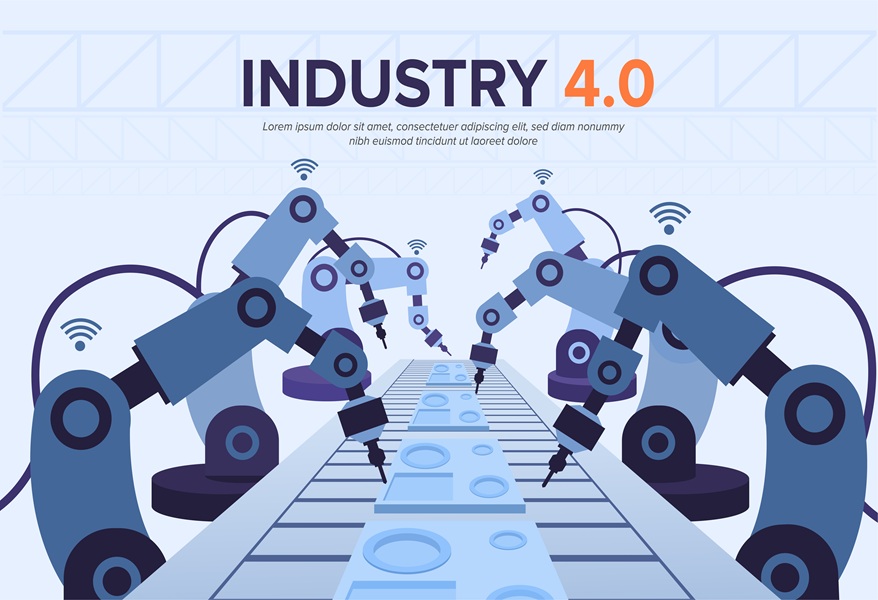
Most enterprise robotics pilots do not fail because the cameras are poor or the compute is insufficient. They fail because the visual representations feeding the control stack are fundamentally the wrong kind of information for physical action. A model that predicts what a scene will look like next frame cannot reliably tell a robot how to move its end-effector through that scene. This article explains why that gap exists, what the architectural shift to 4D embodied representations actually requires, and what engineering leaders need to decide before committing to production-scale robotics infrastructure.
Companion piece to our broader work on video AI architecture. See Video Diffusion Models in Production: What the Geometry Problem Means for Enterprise Deployment for a technical guide to geometric consistency failures in dynamic scenes and what they mean for commercial deployment pipelines.
Why 2D Visual Prediction Cannot Bridge to Physical Action
Standard video generation models operate in pixel space. They learn statistical patterns over RGB sequences and predict what future frames should look like given prior context. This is a powerful capability for content synthesis, but it is the wrong abstraction for robotics.
The core problem is that pixel predictions are projections. They collapse 3D geometry into a 2D surface and discard the depth and motion information that a robot needs to plan contact. A model that accurately predicts the visual appearance of a grasped object can still produce a policy that misses the object entirely, because appearance and geometry are not the same thing.
This is not a solvable problem through better 2D models. It is a structural limitation of the representation. Engineering leaders evaluating robotics vendors should treat any system that relies solely on RGB video prediction as carrying this liability by design.
What 4D Representation Actually Means
The term "4D" in this context refers to the combination of three-dimensional spatial structure with temporal dynamics, represented through synchronized RGB, depth, and optical flow signals. Each modality contributes something the others cannot.
RGB captures appearance and semantic content. Depth encodes the geometric structure of the scene in metric space. Optical flow describes how that structure moves over time. When these three signals are predicted jointly and kept consistent with each other, the resulting representation is substantially closer to the physical state information that robot control requires.
Research from Alibaba DAMO Academy demonstrates this concretely. Their RynnWorld-4D system generates future RGB frames, depth maps, and optical flow from a single RGB-D image and a language instruction within a unified diffusion process, using a tri-branch architecture with cross-modal attention to keep appearance, geometry, and motion coherent across time (Zhao et al., arXiv 2026). The key insight is that this multi-modal synergy narrows the gap between world prediction and policy learning in a way that RGB-only prediction cannot.
The Policy Gap and How Architecture Addresses It
Predicting a physically coherent future state is necessary but not sufficient for robot control. The system also needs to translate that prediction into a concrete action: a joint angle, a force vector, a gripper command. This translation is the policy gap, and it is where many research demonstrations stop short of production relevance.
The conventional approach involves multi-step denoising through the world model at inference time, which is computationally expensive and too slow for closed-loop control in real environments. A more deployable architecture bypasses this by attaching an inverse dynamics head directly to the internal representations of the world model, consuming those representations in a single forward pass to output robot actions (Zhao et al., arXiv 2026). This matters for engineering leaders because inference latency is not a benchmark metric in industrial settings. It is a hard constraint that determines whether a system can operate in real time.
The architectural implication is that world model and policy should be co-designed, not bolted together after the fact. Teams that treat the world model as a standalone perception module and the policy as a separate downstream component will encounter integration friction that is difficult to resolve without retraining both.
Training Data Requirements at Scale
The data requirements for 4D world models are substantially higher than for standard vision systems. Generating pseudo-labels for depth and optical flow at scale requires significant preprocessing infrastructure, and the domain coverage needed for generalisation across industrial environments is not available in any off-the-shelf dataset.
The RynnWorld-4D training dataset, Rynn4DDataset 1.0, comprises over 254 million frames drawn from egocentric human and robotic manipulation videos, with pseudo-labels generated for depth and optical flow across the full corpus (Zhao et al., arXiv 2026). This scale reflects what is required to train a model that generalises across object geometries, lighting conditions, and interaction types. For enterprise teams, this has a direct implication: fine-tuning a foundation world model on proprietary task data is feasible, but the upstream data pipeline to generate consistent RGB-DF triplets from your own environment is a non-trivial engineering investment.
The practical decision point is whether to build that pipeline internally or to partner with a system that already has the pseudo-labelling infrastructure in place. For most manufacturing or logistics operators, building it from scratch is not the right use of engineering capacity.
Infrastructure Decisions That Determine Production Readiness
The compute profile for 4D world models differs from standard vision inference in two important ways. First, the tri-branch architecture requires simultaneous processing of three modality streams with cross-attention between them, which increases memory footprint per inference call. Second, if the system is operating in closed-loop mode, the forward pass must complete within the robot's control cycle, which is typically measured in tens of milliseconds.
This means GPU selection, batching strategy, and model quantisation decisions need to be made with the control loop in mind, not just throughput benchmarks. A system that performs well in offline evaluation but cannot meet real-time latency requirements in the target environment is not a production system.
Beyond compute, the integration architecture matters. Sensor pipelines need to deliver synchronized RGB and depth frames reliably, because temporal misalignment between modalities degrades the quality of the 4D representation. This is an infrastructure constraint that affects camera selection, network topology, and the edge compute stack, and it needs to be resolved before model selection, not after.
Where Vector Labs Fits
We build production computer vision and AI systems for industrial environments, with direct experience integrating sensor pipelines, control logic, and machine learning models into operational manufacturing and automation contexts. Our computer vision work at a manufacturing facility, detailed in our computer vision maintenance system case study, involved deploying live IP camera stream analysis across three production plants, giving us grounded understanding of the gap between pilot performance and production reliability. If you are evaluating robotics AI infrastructure for your environment, speak with our team.
FAQs
A 2D video world model predicts future pixel values, which captures appearance but discards geometric and motion information. A 4D world model jointly predicts RGB, depth, and optical flow, maintaining consistency across all three modalities. For robotics, the difference is whether the model's output can be translated into physical actions reliably. Pixel predictions cannot bridge that gap structurally; synchronized RGB-depth-flow representations substantially close it.
Foundation-level training requires hundreds of millions of frames with pseudo-labels for depth and optical flow, which is not a realistic internal build for most enterprises. Fine-tuning a pre-trained model on domain-specific data is feasible and is the more practical path. The prerequisite is a data pipeline that can produce synchronized RGB-D frames from your environment and generate consistent pseudo-labels at the scale your task distribution requires.
Industrial robot control loops typically operate at frequencies that require inference to complete within tens of milliseconds. Architectures that rely on multi-step denoising through the world model at inference time cannot meet this constraint in most real environments. Systems designed for production use attach a policy head directly to the world model's internal representations, completing the full perception-to-action pass in a single forward call. GPU selection and quantisation strategy need to be validated against your specific control cycle frequency, not just throughput benchmarks.
At minimum, you need synchronized RGB and depth capture, typically via RGB-D cameras such as structured-light or time-of-flight sensors. Temporal synchronisation between modalities is critical because misalignment degrades the quality of the 4D representation. Network topology and edge compute need to be designed to deliver frames within the latency budget of the control loop. These infrastructure decisions should be resolved before model selection, not treated as integration details to handle afterward.
Co-design is strongly preferable. When the world model and policy are developed as separate components and integrated afterward, the internal representations of the world model may not be structured in a way that the policy head can consume efficiently. The most deployable architectures treat the policy as an inverse dynamics head trained on the world model's internal 4D representations, which means both components need to share the same representational assumptions from the start.
The most common failure is not model accuracy in controlled conditions but the inability to bridge from visual prediction to reliable physical action in the actual environment. This manifests as pilots that perform well in structured demos but degrade under real-world variability in lighting, object placement, or scene geometry. The root cause is usually a 2D visual representation that cannot encode the geometric and motion information required for consistent manipulation. Infrastructure mismatches, particularly sensor synchronisation and inference latency, are the second most common failure mode.
More Articles
 8 mins read

 The Verification Gap: Why Shipping Code With AI Agents Is the Easy Part
A practical guide to closing the agent verification loop in production engineering workflows -- cov…
Security
Jul 07, 2026
9 mins read
From Cloud Dependency to On-Premise Control: What the New AI Hardware Stack Means for Enterprise Infrastructure Decisions
A practical guide to evaluating the real cost and capability trade-offs of running frontier AI mode…
Simulation & Modeling
Jul 06, 2026
8 mins read
Transparent Objects, Ambiguous Geometry, and the Edge Cases That Break Production Computer Vision
A practitioner guide to identifying where monocular 3D reconstruction models fail in production - c…
The Verification Gap: Why Shipping Code With AI Agents Is the Easy Part
A practical guide to closing the agent verification loop in production engineering workflows -- cov…
Security
Jul 07, 2026
9 mins read
From Cloud Dependency to On-Premise Control: What the New AI Hardware Stack Means for Enterprise Infrastructure Decisions
A practical guide to evaluating the real cost and capability trade-offs of running frontier AI mode…
Simulation & Modeling
Jul 06, 2026
8 mins read
Transparent Objects, Ambiguous Geometry, and the Edge Cases That Break Production Computer Vision
A practitioner guide to identifying where monocular 3D reconstruction models fail in production - c…