











Physical AI Is Harder Than It Looks: What Tesla Optimus and Tactile Sensing Research Tell Enterprise Robotics Buyers

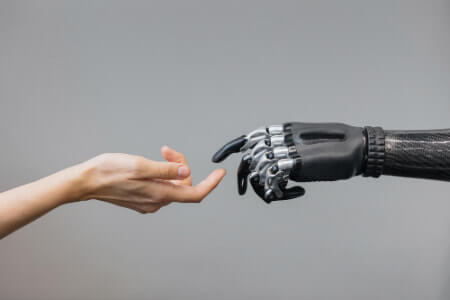
Enterprise buyers are being told that humanoid robotics is arriving faster than any previous wave of industrial automation. The pitch is compelling: general-purpose robots that can be retrained for new tasks, deployed without fixed tooling, and scaled like software headcount. The evidence from both the research community and early production programmes tells a more complicated story. The hardest constraints are not in the neural network weights. They are in the mechanics, the sensors, and the people who have to work alongside these systems every day.
Companion piece to our broader work on physical AI deployment risk. See Physical AI Deployments: Why Robots Fail Where Software Succeeds for a deeper treatment of VLA limitations, training data bottlenecks, and hardware trade-offs.
The Sensor Gap Is Larger Than Vendor Demos Suggest
Controlled demonstrations are optimised for the conditions that make a robot look capable. Production floors are not controlled demonstrations. The gap between those two environments shows up most acutely in sensing.
Why Tactile Encoding Is Still an Unsolved Problem
Vision-Language-Action models have made genuine progress in task generalisation, but they rely on visual input as their primary channel for understanding the world. Under occlusion, during contact-rich manipulation, or when handling deformable materials, vision alone fails. Tactile sensing is the obvious complement, but the field has not yet developed the equivalent of a pre-trained image encoder that a team can drop into a pipeline and trust.
Recent research illustrates the difficulty directly. Tactile-JEPA, a self-supervised pre-training method designed for distributed electronic skin sensors, achieves meaningful accuracy improvements over prior methods, including a 20.8% reduction in in-hand orientation error (Kovtun et al., HuggingFace 2026). That result is significant. It also reveals how much headroom remains: the fact that a new pre-training architecture can move the needle that substantially suggests that baseline tactile representations are still immature relative to their visual counterparts.
The commercial implication is that any vendor claiming production-ready dexterous manipulation should be asked specifically how their tactile encoders were trained, on what data volume, and against what real-world error benchmarks. A demo on a fixed object in a lit environment does not answer that question.
The Sparse Sensor Problem in Industrial Conditions
Electronic skin sensors have a structural property that makes standard vision-based SSL methods a poor fit: their sensing elements are sparse and irregularly arranged across the surface they cover (Kovtun et al., HuggingFace 2026). Adapting around that geometry requires bespoke architectural choices, not off-the-shelf transfer. In a factory environment, sensors also accumulate contamination, wear, and calibration drift at rates that lab conditions do not replicate. Vendors rarely publish mean-time-to-degradation figures for their tactile hardware because those figures are not flattering.
Tesla Optimus and the Production Ramp Reality
Tesla's Optimus programme is the most visible and well-resourced humanoid robotics effort currently running at scale. It is also the clearest public case study in how difficult the step from prototype to production actually is. Reported timelines for meaningful factory deployment have shifted repeatedly, not because the underlying AI has stalled, but because mechanical reliability, parts tolerance, and assembly yield at volume are genuinely hard engineering problems that do not respond to more compute.
The pattern is not unique to Tesla. Across the humanoid and collaborative robotics space, programmes that look compelling at the prototype stage routinely encounter a reliability ceiling when duty cycles increase and environmental variability rises. Software can be patched overnight. Actuator wear, joint backlash, and wiring harness failures require physical intervention and, at scale, a supply chain that most buyers have not planned for.
Workforce Integration Is Not a Change Management Footnote
The framing of workforce integration as a communications problem understates what is actually required. Robots that share physical space with humans create new coordination demands that have to be designed into workflows explicitly. Workers need to understand what the robot will do next, and the robot needs to be predictable enough that understanding is possible.
When that predictability is absent, the practical outcome is not sabotage or resistance. It is workarounds: workers routing around the robot, supervisors adding manual checkpoints, throughput gains evaporating because the human side of the system has adapted defensively. That dynamic is difficult to detect in a pilot and expensive to unwind in a full deployment.
The Due Diligence Questions That Vendors Rarely Answer Voluntarily
Before committing capital, enterprise buyers should treat the following as minimum disclosure requirements rather than optional discovery:
- What is the mean time between failures for each major mechanical subsystem under continuous shift operation?
- What sensor degradation rates have been observed after 90 days of production use, and what is the recalibration process?
- What training data volume underlies the manipulation policies being demonstrated, and how was out-of-distribution performance characterised?
- What does the support and field service model look like at the unit volumes being proposed, and who bears the cost of unplanned downtime?
- Has the system been validated in an environment with the same contamination profile, temperature range, and workflow density as the target deployment?
These questions are not adversarial. They are the minimum necessary to scope a realistic business case. Vendors who cannot answer them clearly are not ready for enterprise deployment, regardless of how capable their demo looks.
How to Scope a Realistic Deployment Timeline
The most reliable heuristic for timeline planning is to take the vendor's estimate, identify the three assumptions it depends on most heavily, and stress-test each one against your specific operational environment. Vendor timelines are typically built around best-case sensor performance, best-case mechanical reliability, and a workforce integration model that assumes smooth adoption.
A more defensible approach is to run a constrained pilot with explicit success criteria tied to production metrics rather than capability demonstrations. Throughput per shift, error rate on representative tasks, and unplanned downtime per week are more informative than task completion rate in a controlled setting. Piloting in a bounded area of your actual facility, with your actual workforce, over a minimum of three months will surface the failure modes that a vendor environment will not.
Physical AI will mature. The research trajectory on tactile sensing, policy learning, and mechanical reliability is genuine. The question for enterprise buyers is not whether the technology will eventually be ready. It is whether the specific system being proposed is ready for your environment, your workflows, and your operational risk tolerance, at the timeline and cost being quoted.
Where Vector Labs Fits
We help enterprise teams build the technical evaluation frameworks needed to assess physical AI vendors and scope deployments against real operational constraints. In our factory-floor deployment guide, we detail the integration architecture, safety constraint design, and failure mode analysis that separates credible programmes from those that stall at pilot stage. If you are currently evaluating a robotics investment and want an independent technical assessment before committing capital, contact us at vector-labs.ai/contacts.
FAQs
Pilots are typically run in conditions that favour the system: bounded tasks, controlled environments, and close vendor support. Full deployments introduce variability in contamination, workflow density, and mechanical duty cycles that pilots do not replicate. The failure modes that matter most only become visible at sustained production volumes over extended periods.
Not yet, for most contact-rich manipulation tasks. Research is advancing, with recent methods like Tactile-JEPA demonstrating meaningful accuracy improvements in force estimation and in-hand orientation tracking. However, pre-trained tactile encoders remain significantly less mature than their visual counterparts, and sensor degradation under real industrial conditions is not well characterised in the published literature.
For most manufacturing and logistics environments, a conservative estimate for moving from pilot to meaningful production contribution is two to four years, assuming the vendor's mechanical reliability targets are met. That timeline extends if workforce integration is underplanned or if the target environment has contamination, temperature, or variability profiles that differ significantly from the vendor's test conditions.
Ask for task completion rates measured on objects drawn from your actual product range, not vendor-supplied props, under your facility's lighting and contamination conditions. Request error rate data, not just success rate data, and ask how the system behaves on failure: does it stop safely, alert an operator, or attempt a recovery that could cause downstream damage?
Field service capacity is the most commonly underestimated factor. Mechanical systems require physical intervention when they fail, and at scale that means either a trained internal maintenance team or a vendor service agreement with contractually guaranteed response times. Most buyers focus budget on the robots themselves and underinvest in the support infrastructure needed to keep them running through a full production shift.
More Articles
 7 mins read

 Physical AI in Production: What Waymo's Fleet Data and Academic Robotics Research Reveal About Deployment Reality
A technically grounded analysis of what enterprise and infrastructure leaders should infer from the…
Simulation & Modeling
Sep 25, 2026
8 mins read
Physical AI Has a Reliability Problem That Benchmarks Will Not Solve
A practical guide to the gap between frontier robotics model capability and production-grade deploy…
Edge AI
Sep 24, 2026
8 mins read
Before You Budget for Physical AI: What Agility's IPO Financials and Lab Research Actually Tell Enterprise Buyers
A commercially grounded analysis of what humanoid robotics deployments cost enterprises today versu…
Physical AI in Production: What Waymo's Fleet Data and Academic Robotics Research Reveal About Deployment Reality
A technically grounded analysis of what enterprise and infrastructure leaders should infer from the…
Simulation & Modeling
Sep 25, 2026
8 mins read
Physical AI Has a Reliability Problem That Benchmarks Will Not Solve
A practical guide to the gap between frontier robotics model capability and production-grade deploy…
Edge AI
Sep 24, 2026
8 mins read
Before You Budget for Physical AI: What Agility's IPO Financials and Lab Research Actually Tell Enterprise Buyers
A commercially grounded analysis of what humanoid robotics deployments cost enterprises today versu…