











Physical AI Is Not a Software Problem: What Enterprise Leaders Must Understand Before Betting on Robotics

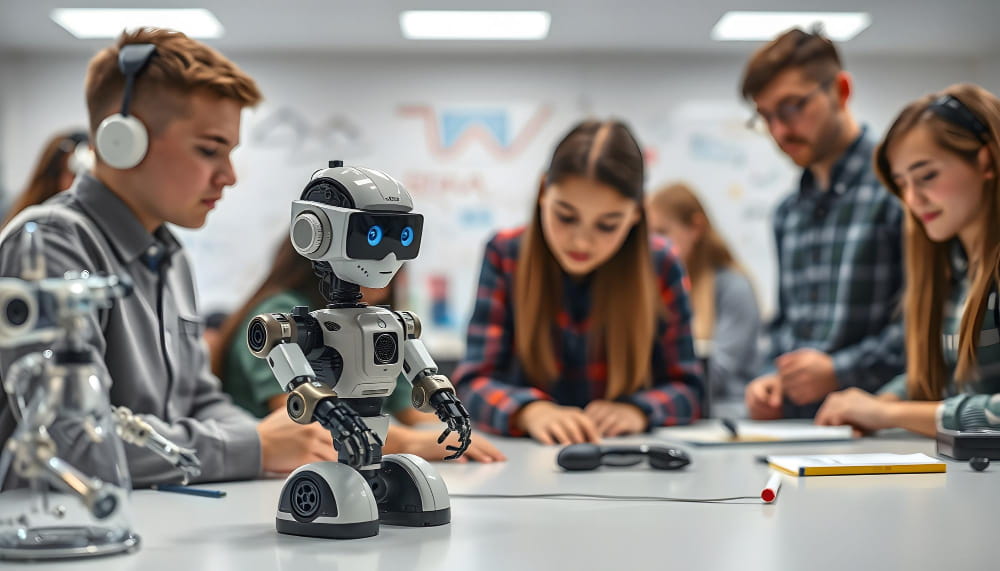
The prevailing assumption among enterprise technology leaders evaluating humanoid robotics is that the hard part is already solved. Capable vision models exist. Large language models can reason about instructions. Vision-language-action architectures are maturing. The logic follows that deploying a physical AI system is largely an integration exercise, a matter of connecting proven components into a working whole. That assumption is wrong, and acting on it is expensive.
Companion piece to our broader work on physical AI production readiness. See From General-Purpose to Production-Ready: What CTOs Must Solve Before Deploying Physical AI on the Factory Floor for a technical and strategic guide covering integration architecture, safety constraints, and failure modes in live industrial environments.
Why Software AI Intuitions Break Down at the Physical Layer
Software AI systems fail gracefully. A misclassified document, a hallucinated summary, a retrieval miss: these are recoverable errors. A robot that misjudges grip force during a pick-and-place operation on an automotive assembly line is not a recoverable error. The physics of the physical world introduce a failure category that software systems simply do not face, and that category does not shrink because the underlying model is more capable.
The gap is not primarily about model quality. It is about the feedback loop. In a software system, the model receives structured inputs and produces structured outputs. In a physical system, the model must act on sensor data that is noisy, latency-sensitive, and physically ambiguous, then issue commands to actuators whose mechanical tolerances interact with the environment in ways that cannot be fully simulated in advance. That interaction surface is where deployments fail.
Enterprise leaders evaluating physical AI vendors need to understand that model benchmark performance is a necessary but insufficient signal. A system that achieves state-of-the-art results on manipulation benchmarks in a controlled lab environment may degrade significantly when confronted with lighting variation, surface contamination, or mechanical wear on the production floor.
The Edge Inference Constraint Is Not Solved by Better Hardware
One of the most consistently underestimated constraints in physical AI deployment is on-device inference. Cloud-connected inference is not viable for real-time robotic control. The latency requirements for closed-loop motor control typically operate in the range of tens of milliseconds. Round-trip network latency, even on a low-latency enterprise network, introduces delays that make cloud inference unsuitable for anything requiring precise physical coordination.
This forces the inference workload onto edge hardware that is constrained by power envelope, thermal limits, and physical form factor. A humanoid robot that must carry its own compute cannot carry the same silicon that powers a server rack. The result is a hard engineering trade-off between model capability and deployable compute, and that trade-off is not resolved by pointing to what the model can do when running on unconstrained infrastructure.
The practical implication for vendor evaluation is direct. When a vendor demonstrates a capability, ask where the inference is running. If the answer is a cloud endpoint or an off-robot compute unit, the demonstration does not reflect the system's production architecture. The on-device inference profile is the one that matters.
What the XPeng IRON and Tesla Optimus Divergence Reveals About Vendor Risk
The contrast between XPeng's IRON deployment milestone and Tesla's Optimus programme is instructive, not because one is ahead of the other on a capability dimension, but because they represent different theories of what production readiness means. XPeng's decision to deploy IRON on its own manufacturing line before offering it commercially reflects a specific risk posture: prove the system against your own operational costs before asking a customer to absorb that risk. That is a meaningful signal about where the vendor believes the system actually sits on the readiness curve.
Tesla's Optimus programme has proceeded with significant public visibility around capability demonstrations while production deployment at scale remains a forward commitment. That is not a criticism of the technical work. It is an observation that demonstration timelines and production timelines are different things, and enterprise buyers who conflate them are pricing risk incorrectly.
The due diligence question this raises is not which system looks more impressive in a video. It is which vendor has exposed their system to the failure modes that only appear under production conditions: shift-to-shift variability, maintenance cycles, operator interaction, and the long tail of edge cases that structured demonstrations are designed to avoid.
Manufacturing Readiness Is a Different Discipline Than Model Readiness
System Integration Complexity
The integration surface between a physical AI system and an existing production environment is substantially more complex than the equivalent software integration. A software AI system integrates via APIs, data pipelines, and identity systems. A physical AI system integrates with floor-level PLCs, safety interlock systems, material handling infrastructure, and the physical ergonomics of the workspace. Each of those integration points introduces failure modes that are not visible in the model's performance metrics.
Safety certification adds another layer. Industrial environments governed by machinery safety standards require documented risk assessments, functional safety analysis, and in many jurisdictions, third-party certification before a robot can operate alongside human workers. A vendor that has not navigated that process in a production environment is not production-ready, regardless of model capability.
Mechanical-Software Co-Design
The mechanical design of a robot and the software architecture that controls it are not independent problems. Actuator selection affects the control frequency the software must operate at. Joint compliance characteristics affect how the system recovers from contact events. Sensor placement affects what the model can perceive and what it cannot. Vendors that have developed hardware and software in parallel, under production constraints, have a different understanding of these interactions than vendors who have optimised a software stack for a reference hardware platform.
This matters for enterprise buyers because it affects maintainability. A system where the mechanical and software layers are tightly co-designed requires specialised expertise to maintain. Understanding where that expertise lives, in-house at the vendor, in a service contract, or expected from the buyer, is a prerequisite for realistic total cost of ownership analysis.
A Different Due Diligence Framework for Physical AI Vendors
Applying a software AI evaluation framework to physical AI vendors produces systematically optimistic assessments. The signals that indicate a mature software AI vendor, benchmark performance, model size, inference speed on standard hardware, API reliability - do not transfer cleanly to the physical domain.
The signals that matter for physical AI vendor evaluation are operational in nature. How many units are operating in production environments, not pilots? What is the mean time between failures under production conditions? What does the fault recovery process look like, and who owns it? What is the vendor's position on liability when a system failure causes a line stoppage or a safety incident?
Vendors that have genuine production deployments can answer these questions with specificity. Vendors that have not yet crossed the line from demonstration to production will tend to redirect toward capability roadmaps and benchmark comparisons. The ability to distinguish between those two responses is the most practically useful skill an enterprise buyer can develop before entering a procurement process for physical AI.
Where Vector Labs Fits
We help industrial and engineering organisations evaluate physical AI systems against production constraints, not just capability benchmarks. In our physical AI deployment analysis, we examine the specific failure modes that emerge when AI systems move from controlled environments to live operational settings, providing the technical grounding enterprise leaders need before committing to a vendor or architecture. If you are evaluating physical AI vendors or assessing deployment timelines for your organisation, contact us at vector-labs.ai/contacts.
FAQs
Ask how many units are operating in uncontrolled production environments today, not in pilots or controlled demonstrations. A vendor with genuine production deployments can give you specific figures on uptime, fault rates, and recovery procedures. A vendor who redirects to roadmap milestones or benchmark results has not yet crossed the line from development to production readiness.
Closed-loop motor control requires feedback and command cycles operating in the range of tens of milliseconds. Round-trip network latency, even on a well-managed enterprise network, exceeds that threshold for precision tasks. This means the inference workload must run on hardware carried by or immediately adjacent to the robot, within the constraints of its power envelope and thermal budget, not on unconstrained cloud infrastructure.
Treat demonstrations as evidence of what the system can do under conditions the vendor controls, not evidence of what it will do in your environment. The meaningful questions are where the inference is running during the demonstration, what the lighting and surface conditions are, and whether the task shown reflects the variability your production environment will introduce. A demonstration that does not expose the system to realistic failure conditions does not reduce your deployment risk.
Requirements vary by jurisdiction and application, but industrial environments typically require documented risk assessments, functional safety analysis aligned to relevant machinery safety standards, and in many cases third-party certification before a robot can operate in a human-collaborative context. Vendors who have not navigated this process in a production environment will not have the documentation or incident history that a certification process requires. Confirm whether the vendor or the buyer is expected to own this process before signing a contract.
When a robot's hardware and software are designed together under production constraints, the resulting system has dependencies between its mechanical characteristics and its control architecture that are not always visible in documentation. This means maintenance, fault diagnosis, and hardware replacement may require expertise that only the vendor holds. Before deployment, clarify whether maintenance capability can be developed in-house, what the vendor's service contract covers, and what happens to supportability if the vendor's commercial position changes.
More Articles
 8 mins read

 What Autonomous Ride-Hailing Teaches Enterprise AI Teams About Fleet Density and Production Readiness
A strategic analysis of how the Tesla Cybercab Austin launch exposes the gap between price-competit…
Simulation & Modeling
Sep 08, 2026
9 mins read
3D Reconstruction at Scale: What Engineering Leaders Need to Know Before Committing to a Visual AI Pipeline
A technical guide to evaluating production-readiness of modern 3D reconstruction and shape-matching…
Edge AI
Sep 08, 2026
8 mins read
Physical AI in Production: What the Cybercab Launch Tells Enterprise Leaders About Autonomous System Readiness
A technical and commercial analysis of what Tesla's Cybercab paid deployment reveals about the gap …
What Autonomous Ride-Hailing Teaches Enterprise AI Teams About Fleet Density and Production Readiness
A strategic analysis of how the Tesla Cybercab Austin launch exposes the gap between price-competit…
Simulation & Modeling
Sep 08, 2026
9 mins read
3D Reconstruction at Scale: What Engineering Leaders Need to Know Before Committing to a Visual AI Pipeline
A technical guide to evaluating production-readiness of modern 3D reconstruction and shape-matching…
Edge AI
Sep 08, 2026
8 mins read
Physical AI in Production: What the Cybercab Launch Tells Enterprise Leaders About Autonomous System Readiness
A technical and commercial analysis of what Tesla's Cybercab paid deployment reveals about the gap …