







Staged Rollouts and Restricted Access: What Frontier Model Release Strategy Means for Enterprise Planning

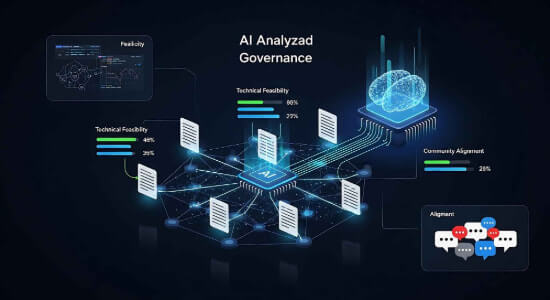
When Gemini 4 Carbon debuted at the top of the Artificial Analysis Intelligence Index, it did so behind a waitlist. The model that independent benchmarks ranked first was not available to most enterprises trying to make procurement decisions. That gap between benchmark leadership and actual access is no longer an edge case. It is becoming a structural feature of how frontier labs release their most capable models, and enterprise technology leaders need a planning framework that accounts for it.
Companion piece to our broader work on model evaluation strategy. See Beyond Benchmarks: How CTOs Should Actually Evaluate New Model Releases Before Committing to Them for a practical framework covering benchmark literacy, architecture trade-offs, and inference cost realities.
What Phased Releases Are Actually Signalling
Frontier labs do not restrict access arbitrarily. When a model launches into a curated access program rather than broad general availability, it almost always reflects one of two conditions: the lab is still gathering safety and alignment data at scale, or the inference infrastructure needed to serve the model reliably cannot yet absorb unrestricted demand.
Both conditions matter for enterprise buyers, but for different reasons. A safety-gated rollout tells you that the model's behaviour under diverse, adversarial, or edge-case prompts is not yet fully characterised. That is a due diligence signal, not just a scheduling inconvenience.
An infrastructure-gated rollout tells you something different. It tells you the lab has prioritised capability development over deployment readiness, which has direct implications for latency, uptime commitments, and SLA reliability once you do get access.
Why Benchmark Rankings Do Not Map Cleanly to Procurement Timelines
The Artificial Analysis Intelligence Index aggregates performance across a range of tasks and provides one of the more rigorous independent views of model capability available publicly. When a model tops that index, it is a meaningful signal. The mistake is treating that signal as a proxy for availability.
Benchmark rankings are a snapshot of capability at evaluation time. General availability is a function of safety review completion, regulatory compliance in target jurisdictions, infrastructure provisioning, and commercial pricing decisions. These timelines are largely independent of each other, and labs do not publish them in advance.
This means that an enterprise planning a production deployment around a top-ranked model could be building a roadmap against a capability that is six to eighteen months from reliable, contracted access. That planning gap has real costs: delayed product launches, stranded engineering work, and the need to re-evaluate alternatives mid-cycle.
How to Stress-Test Vendor Benchmark Claims
When a vendor cites benchmark performance in a sales conversation, the first question is which benchmark and under what conditions. Closed evaluations run by the lab itself carry less weight than results published on independent indices. The methodology matters: task composition, prompt formatting, and evaluation harness all affect scores in ways that may not reflect your specific workload.
The second question is whether the benchmark tasks are structurally similar to your production use case. A model that leads on graduate-level reasoning benchmarks may underperform on document extraction or structured output generation, which are the tasks most enterprise workloads actually depend on.
The practical approach is to run your own evals on a representative sample of your production data before any procurement commitment. Independent indices like Artificial Analysis give you a calibrated starting point for shortlisting, but they are not a substitute for task-specific validation against your own distribution.
Building a Procurement Strategy Around Access Uncertainty
The first step is to separate your model evaluation roadmap from your deployment roadmap. Tracking capability developments, including restricted-access releases, is worthwhile even when those models are not yet procurable. It informs your architectural decisions and tells you what trade-offs you are accepting by deploying a currently available alternative.
The second step is to negotiate access terms explicitly. Curated access programs sometimes offer enterprise pathways with committed timelines. If a vendor cannot give you a contractual availability date, that uncertainty should be priced into your planning assumptions, not ignored.
The third step is to maintain optionality in your stack. Building a production system with hard dependencies on a single model provider concentrates risk in a way that phased rollout patterns make worse. Abstraction layers at the inference interface level reduce the cost of switching when access conditions change.
Evaluating the Risk Profile of Early Access
Joining a curated access program for a top-ranked model can be strategically valuable, but it carries risks that broad availability releases do not. Rate limits, model versioning without notice, and the absence of standard SLAs are common in early access environments. These are acceptable for experimental workloads and not acceptable for production systems with uptime requirements.
The distinction to maintain is between evaluation access and production access. Using restricted access to build internal benchmarks, test integration patterns, and validate task performance is sensible. Committing a production workload to a model that is still in a curated program is a different decision with a different risk profile.
Safety maturity is a related consideration. A model that a lab is still actively evaluating through a restricted program has not completed the safety review cycle that typically precedes general availability. For regulated industries, that status may have compliance implications that go beyond performance metrics.
Where Vector Labs Fits
We help enterprise teams build model evaluation and procurement processes that hold up when benchmark claims and access timelines diverge. In our benchmark evaluation analysis, we set out the architecture trade-offs and inference cost realities that headline numbers consistently obscure. If you are navigating a procurement decision under access uncertainty, contact us at vector-labs.ai/contacts.
FAQs
Ranking first on an independent index is a meaningful signal of capability, but it does not tell you when the model will be broadly available, what SLAs will apply, or how it performs on your specific task distribution. Use index rankings to inform your shortlist and your internal evaluation priorities, not as a direct input to your procurement timeline.
It typically signals one of two things: the lab is still completing safety and alignment evaluation at scale, or the inference infrastructure cannot yet support unrestricted demand reliably. Both conditions have implications for production readiness. A safety-gated release means behaviour under edge cases is not fully characterised. An infrastructure-gated release means SLA commitments are likely to be weaker than they will be at general availability.
Early access is well suited to internal benchmarking, integration testing, and task-specific validation against your own data. It is not suited to production workloads that carry uptime requirements or SLA obligations. The absence of standard contractual protections in most curated programs makes that distinction important to maintain explicitly within your engineering and procurement teams.
Separate your capability tracking roadmap from your deployment roadmap. Monitoring restricted-access releases and benchmark developments is useful for architectural planning and for understanding the trade-offs in currently available alternatives. Committing delivery timelines to capabilities that depend on models without contracted access dates introduces planning risk that is avoidable with a cleaner separation between the two tracks.
Push for a committed general availability date with a contractual fallback if that date slips, explicit versioning and change notification terms so model updates do not affect production behaviour without warning, and SLA terms that are equivalent to what the vendor offers on its generally available models. If a vendor cannot provide these terms, that is relevant information for your risk assessment of the procurement.
More Articles
 7 mins read

 When AI Labs Become Drug Companies: What Anthropic's Biotech Push Means for Enterprise AI Procurement
A strategic analysis of what happens to the AI vendor landscape when frontier model providers move …
Simulation & Modeling
Oct 29, 2026
9 mins read
World Models, Spatial Reasoning, and the Enterprise Readiness Gap in Embodied AI
A technical and strategic guide to what advances in world simulation and multimodal spatial percept…
Edge AI
Oct 29, 2026
8 mins read
On-Device AI Models Are Maturing Faster Than Your Deployment Strategy: What Engineering Leaders Need to Know
A practical guide to evaluating the new generation of compact multimodal models for edge and on-dev…