







AI Governance Without Business Alignment Is Just Theater: What CIOs Are Getting Wrong About Control

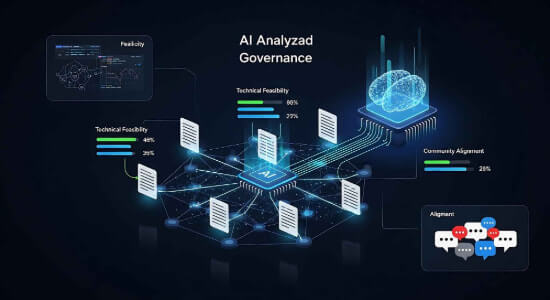
Most enterprise AI governance programs look serious from the outside. There are steering committees, risk registers, model inventories, and quarterly reports to the board. What they often lack is any meaningful connection to whether the AI systems they govern are actually creating value. That disconnect is not a minor gap in execution. It is the reason governance frameworks get quietly defunded, worked around, or reduced to paperwork that nobody reads.
The argument here is not that governance is unnecessary. It is that governance designed without reference to business outcomes produces control structures that cannot survive contact with commercial pressure. When the governance team and the P&L owner are working from different success criteria, the P&L owner wins. Every time.
Companion piece to our broader work on AI governance under regulatory pressure. See AI Governance When Oversight Becomes Voluntary for how to build binding internal compliance architecture when external regulation weakens.
Activity Metrics Are Not Value Metrics
The first failure mode is measurement. Governance programs tend to report what is easy to count: models reviewed, incidents logged, policies updated, training completions. These are activity metrics. They tell you the governance process ran. They do not tell you whether the AI portfolio is generating return, reducing cost, or managing risk in proportion to the exposure it creates.
This matters because boards and CFOs allocate budget to functions that can demonstrate contribution to outcomes. A governance team that reports only on process compliance is making an implicit argument that its value is procedural. That argument does not hold when budgets tighten or when a business unit head argues that governance is slowing down a high-value deployment.
The fix is to instrument governance against the same outcome metrics the business uses. If a model is deployed to reduce claims processing time, governance reporting should track whether it is doing that, and what the failure modes look like when it does not. Control and value measurement need to share the same data.
The Retrofitting Problem
Most governance frameworks are built after AI systems are already in production. A model goes live, generates some business attention, and then someone in risk or compliance is asked to build a framework around it. This sequence creates a structural problem: the governance team is now auditing decisions that were made without their input, trying to impose controls on systems whose architecture was never designed to accommodate them.
Retrofitting governance is expensive and often incomplete. Data lineage is harder to reconstruct than to capture at the start. Risk tolerances that should have shaped model design instead become post-hoc justifications for why the model is acceptable. The result is governance that documents what exists rather than shaping what gets built.
Co-design is the alternative. Governance criteria, including outcome thresholds, monitoring requirements, and escalation triggers, should be part of the model development brief, not a review gate at the end. This requires governance functions to have technical credibility and business context, not just policy knowledge.
Organizational Conditions That Let Governance Scale
Accountability Needs to Live in the Business
Governance frameworks that concentrate accountability in a central team create a single point of failure. When the central team is under-resourced or lacks authority, the framework stalls. When it is over-resourced, it becomes a bottleneck that business units route around. Neither outcome is functional.
Effective governance distributes accountability to the people who own the business outcomes. The model owner in a business unit should carry explicit responsibility for that model's performance against defined thresholds, with the central governance function providing the framework, tooling, and escalation path. This is not a reduction in oversight. It is a design that makes oversight sustainable at scale.
Technical Fluency Is a Governance Prerequisite
Governance teams that cannot read a model card, interpret a confusion matrix, or understand the difference between distributional shift and model drift cannot make credible risk assessments. They can only check boxes. Business units recognize this quickly, and the result is that governance becomes a formality rather than a function.
Investing in technical fluency within governance is not optional if the goal is control that actually works. This does not mean every governance professional needs to be a data scientist. It means the function needs enough technical depth to interrogate claims made by engineering teams and to identify when a model's real-world behavior has diverged from its documented behavior.
When Commercial Pressure Tests the Framework
The real test of any governance framework is what happens when a high-value deployment is at risk of being delayed or blocked. This is the moment where frameworks that were designed as compliance theater collapse. The business case is compelling, the timeline is tight, and the governance review is on the critical path. If the framework has no mechanism for risk-adjusted fast-tracking, and no credibility with the business unit, it will be bypassed.
Frameworks that survive this pressure share a common design feature: they are explicit about the conditions under which risk can be accepted and by whom. A governance framework that says "no" without offering a structured path to "yes under these conditions" is not a control mechanism. It is an obstacle. Obstacles get removed.
This is also where the connection to business outcomes becomes protective rather than just strategic. If governance reporting is already tracking value creation, the governance function has standing to say that a rushed deployment in a high-risk domain is likely to destroy the value it is meant to generate. That argument carries weight. A purely procedural objection does not.
Building Control Structures That Last
Durable governance is built on three conditions: outcome metrics that the business recognizes as legitimate, accountability structures that sit inside the business rather than adjacent to it, and technical credibility sufficient to make risk assessments that engineering teams cannot simply dismiss.
None of these conditions are created by policy documents alone. They require governance to be treated as a design discipline from the start of an AI program, not a compliance function that reviews outputs after the fact. The CIOs who are getting this right are the ones who have made governance a precondition for deployment funding, not a parallel process that runs alongside it.
The governance frameworks that fail are not failing because the people running them are incompetent. They are failing because they were designed to demonstrate control rather than to exercise it. Demonstrating control and exercising it are not the same thing, and boards are increasingly in a position to tell the difference.
Where Vector Labs Fits
We build AI systems where governance and outcome measurement are designed together from the start, not separated into different workstreams. In our cardiovascular certification work, we structured validation and regulatory documentation from the outset of model development, achieving Class 2A medical device certification and delivering within the product launch timeline. If you are designing governance that needs to hold up under both regulatory and commercial scrutiny, contact us at vector-labs.ai/contacts.
FAQs
Start with the models that carry the most material business impact and map their governance reporting to the same KPIs the business unit already tracks. You do not need a universal framework on day one. Demonstrating that governance can speak the language of value in one high-visibility case creates the credibility to expand that approach across the portfolio.
It means governance criteria are part of the model development brief before any code is written. Risk thresholds, monitoring requirements, data lineage standards, and escalation triggers are defined alongside the business objective and the technical specification. The governance team reviews the brief, not just the output.
Design explicit fast-track pathways for lower-risk deployments and make the conditions for those pathways transparent. When business units understand that governance offers a structured route to approval rather than a binary gate, they are more likely to engage with it than to circumvent it. The bottleneck problem is usually a design problem, not a resourcing one.
Enough to interrogate the claims made in model documentation and to identify when a model's production behavior has diverged from its validated behavior. This means understanding performance metrics, knowing what distributional shift looks like in practice, and being able to read a model card critically. Full data science capability is not required, but the function needs at least one person who can translate between technical and governance language credibly.
Frame governance as the function that protects the return, not the function that constrains it. A model that fails in production, generates a regulatory incident, or produces biased outputs in a high-visibility context destroys more value than the governance process costs. Boards respond to that framing because it connects oversight to the financial outcomes they are already accountable for.
More Articles
 8 mins read

 Why Your AI Agents Know How to Click But Not How to Win: Closing the Goal Gap in Enterprise Automation
A practical guide to the distinction between task execution and goal achievement in enterprise AI a…
Enterprise Architecture
Oct 04, 2026
8 mins read
Why AI Modernization Programs Stall Before They Ship: The Operational Risk CIOs Are Not Pricing In
A practical guide to sequencing AI infrastructure modernization without operational collapse - cove…
AI Strategy
Sep 24, 2026
8 mins read
Data Ownership Is an Accountability Problem, Not a Storage Problem: What Engineering Leaders Get Wrong Before AI Systems Go Live
A practical guide to resolving enterprise data ownership ambiguity before it breaks AI pipelines - …