











Bridging the Production Gap: From Experimental AI to Measurable Business Value


Executive Summary
The enterprise AI landscape has shifted from a race for innovation to a race for industrialisation. While the last 24 months were defined by rapid prototyping and generative experimentation, the current market demands a transition from stochastic prototypes to deterministic business tools. Currently, a massive "Production Gap" exists where the majority of AI initiatives fail to move beyond Proof of Concept (POC) into live, value-generating environments.
VECTOR Labs bridges this gap. By combining the scientific rigor of PhD-level econometrics with the structured delivery frameworks of Tier-1 global consultancies, we transform speculative AI projects into high-magnitude business assets. Our philosophy is rooted in engineering precision: we provide the Direction (Strategy) and Magnitude (Engineering) to move your organisation From AI to Value.
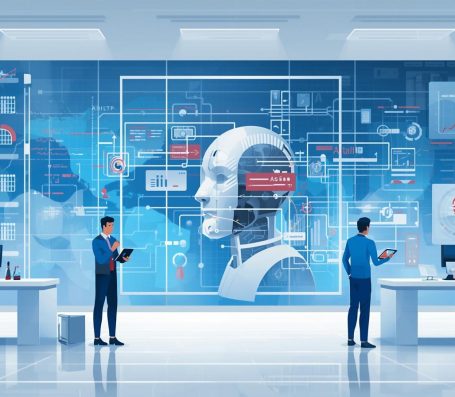
The Sobering Reality of the Production Gap
The "Production Gap" is not a failure of imagination. It is a failure of fundamental engineering and strategic alignment. Industry data suggests that approximately 80% of AI projects never reach deployment. Furthermore, among those that do launch, nearly half fail to provide a clear Return on Investment (ROI).
The core of the problem lies in the "Stochastic Trap", the tendency to build models that perform well in a controlled sandbox but collapse under the pressure of real-world data drift, regulatory requirements, and legacy infrastructure. Enterprises are discovering that a "wrapper-based" approach to AI lacks the mathematical integrity required to drive positive ROI impact in short terms.>
The Three Pillars of Failure
To solve the Production Gap, we must first diagnose the structural weaknesses that cause most AI initiatives to stall:
- The Scientific Integrity Gap: Many AI solutions are built on "black-box" logic. Without a deep understanding of first-principles data science, such as econometric modeling and Bayesian inference these models are brittle. They lack the predictability required for high-stakes enterprise decision-making.
- The Translation Void: There is often a profound disconnect between boardroom objectives and engineering output. When a business goal like "Optimise Net Interest Margin" is not accurately translated into a specific algorithmic variable, the resulting AI tool solves the wrong problem.
- The Integration Friction: AI does not exist in a vacuum. The inability to seamlessly integrate high-performing models into legacy tech stacks or modern data clouds like AWS, Azure, Google Cloud or Snowflake is a primary reason why POCs remain stuck in the lab.
The VECTOR Labs Pedigree: A Higher Standard of Authority
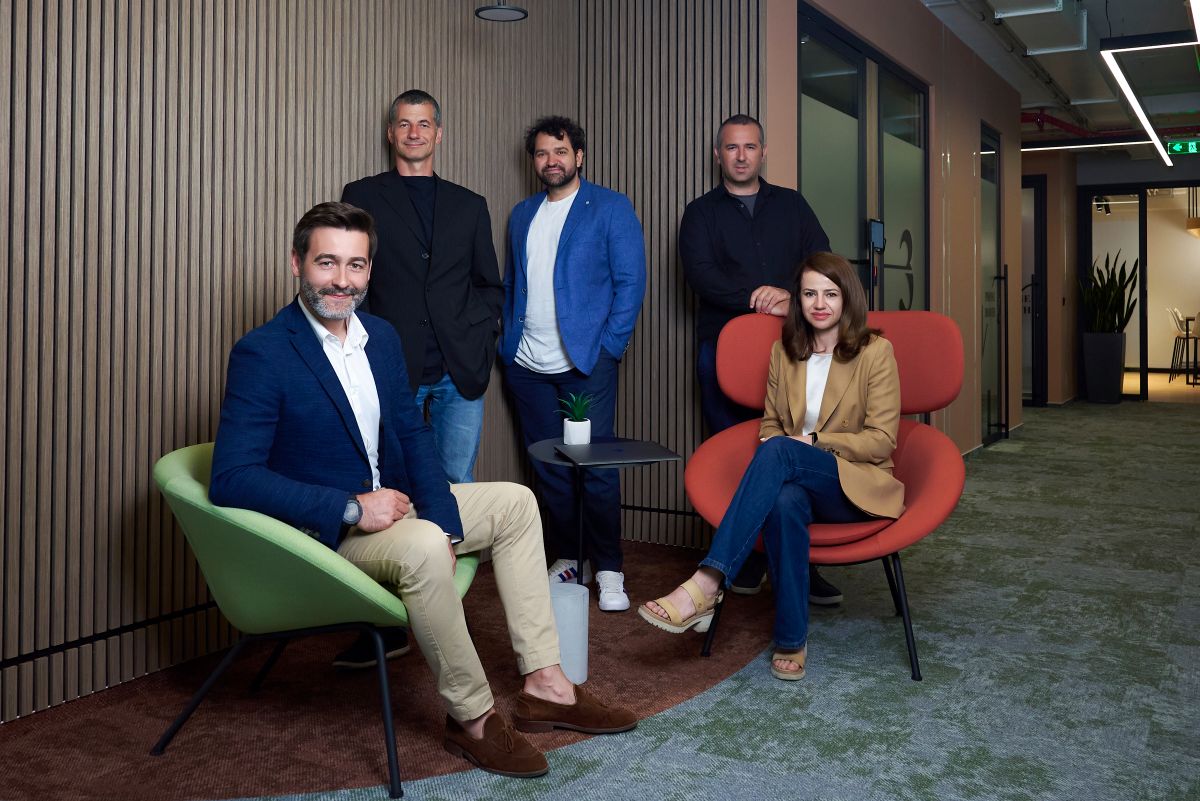
VECTOR Labs was founded to replace the "trial and error" model of AI with scientific certainty. We distinguish ourselves through two core competitive advantages:
Stanford-Grade Scientific Rigor
Our technical leadership is rooted in the highest levels of academia. Our Chief Scientific Officer Georgi Nalbantov holds a PhD in Econometrics and Computer Science from Erasmus University (2008) and conducted post-doctoral research at Stanford University. This isn't just a credential, it is our operational blueprint. We train every VECTOR Labs engineer in these deep fundamentals, ensuring that every solution we build is mathematically sound, demonstrably reliable, and built from the ground up, not just an API wrapper.
The Big Consulting DNA Science without structure is merely research. Drawing from our leadership’s background at Deloitte and Cognizant, we bring the rigorous delivery standards and strategic alignment of the world’s leading consultancies. We provide the boutique agility of a specialised AI lab with the professional reliability and scalable thinking of a global partner.
The Road to Production: The VECTOR Framework
We move your organisation through a structured, four-step process designed to eliminate risk and maximise ROI:
- Step 1: Diagnostic Translation: Mapping specific business challenges (churn, risk, operational efficiency) into a technical algorithmic roadmap.
- Step 2: Fundamental Engineering: Building custom models based on first principles to ensure transparency, explainability, and long-term stability.
- Step 3: Enterprise Orchestration: Integrating AI into your existing production environment, ensuring it scales alongside your data infrastructure and meets regulatory standards.
- Step 4: Value Validation: Measuring the magnitude of the impact to ensure the model moves the needle on defined KPIs.
Action Plan: Assessing Your AI Maturity
To bridge the gap in your organisation, the Office of the CTO or Chief AI Officer must move beyond experimentation. We recommend an immediate audit of your current AI pipeline:
- Identify "Zombie POCs": Catalog projects that have been in "testing" for more than six months without a clear path to production.
- Audit for Explainability: Ask your engineering team if they can mathematically explain why a model made a specific prediction. If they cannot, it is an enterprise liability.
- Quantify the Translation: Can you draw a direct line from your current AI sprints to a specific line item on your balance sheet?
The path from AI to Value requires more than code. It requires a Vector.
Let us provide the direction and the magnitude.