







Teaching Robots From Human Video: What Universal Action Representations Mean for Enterprise Robotics Programs

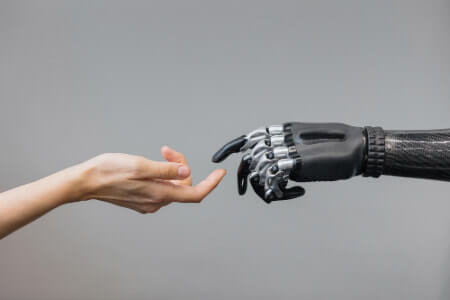
Most enterprise robotics programs hit the same wall at roughly the same point: a policy trained on one robot, in one environment, with one set of end-effectors, does not transfer cleanly to a second robot, a second cell, or a second facility. The result is a retraining cycle that was never budgeted, on a timeline that was never planned, consuming engineering resources that were already stretched. The architectural reason for this is straightforward. Current action policies bind learned behaviour to the specific embodiment that produced the training data. Change the body, and the policy breaks. DreamX's approach of extracting embodiment-invariant latent actions from video diffusion models signals a potential path around this constraint, and it is worth understanding precisely what the architecture does, where it currently sits relative to production readiness, and what it would actually mean for industrial automation programs if the approach matures.
Companion piece to our broader work on robotics policy failures in production. See Why Markovian Robotics Policies Break Down in Production for a technical analysis of memory-grounded architectures and where stateless policies collapse on long-horizon tasks.
Why Embodiment-Specific Policies Create Structural Program Risk
The core problem is one of data entanglement. When a policy learns from robot demonstrations, it does not learn a clean representation of the underlying action. It learns a representation that conflates the action with the robot's kinematics, the camera perspective, the lighting conditions, and the specific control parameterisation used during data collection. This conflation is invisible during evaluation on the training distribution and only becomes visible when you try to deploy elsewhere.
The commercial consequence is that every new robot platform, every new facility layout, and every new camera rig effectively resets the data collection problem. Engineering teams that expected to amortise their initial training investment across multiple deployments find instead that each deployment is a near-fresh start. This is not a failure of execution. It is a structural property of how current policies represent actions.
What DreamX Is Actually Doing
DreamX repurposes a pretrained video diffusion model as the backbone for action learning, rather than training an action encoder from scratch. The insight is that video diffusion models have already learned rich spatiotemporal representations of how the world moves, across diverse scenes, objects, and camera perspectives. Those representations carry information about motion dynamics that is, by construction, less entangled with specific visual appearances than representations learned purely from robot data.
The system compresses each latent video frame from 1,200 tokens down to 4, a 300x reduction, while preserving the motion-relevant structure needed for action inference (Kim et al., HuggingFace 2026). The resulting latent actions are compact enough to serve as a practical action interface and general enough to transfer across embodiments, including from human egocentric video to robot control, without requiring paired human-robot training data.
Latent Action Transfer
The practical implication of a shared latent action space is that motion demonstrated in one context can be decoded into executable actions in a different context. Human video of a manipulation task can, in principle, inform a robot policy without the laborious process of re-collecting equivalent robot demonstrations. This matters because human video is abundant and cheap to acquire. Robot demonstrations with accurate action labels are neither.
Zero-Shot Cross-Embodiment Transfer
DreamX's reported zero-shot transfer across diverse embodiments and environments on the LARY-Bench evaluation suite is the result that warrants the most careful scrutiny (Kim et al., HuggingFace 2026). Zero-shot performance on a benchmark is not the same as zero-shot performance in a production environment. Benchmarks are controlled. Production environments are not.
The Gap Between Lab Benchmarks and Production Deployment
Benchmark performance answers a narrow question: does the latent space generalise across the evaluation distribution? It does not answer the questions that matter most for industrial deployment. How does the system behave when the target environment differs from anything in the training distribution? How does it handle partial occlusion, variable lighting, or novel object geometries? What is the failure mode when the latent action decoder produces a physically implausible robot command?
These are not criticisms of the DreamX research. They are the standard gap between research systems and production systems, and they apply to every architecture in this space. The honest position for a CTO evaluating this work is that the architecture is promising and the benchmark results are meaningful, but the distance between a KAIST lab evaluation and a production logistics cell is measured in years of engineering, not months.
What Genuine Embodiment-Agnostic Representations Would Change
If the latent action approach matures to production readiness, the strategic implications for enterprise robotics programs are significant. The most immediate is a reduction in the marginal cost of adding a new robot platform to an existing program. Today, each new platform requires new data collection, new policy training, and new evaluation cycles. A genuinely shared action interface would compress that process substantially.
The second implication is that human video becomes a first-class data source for robot policy improvement. Facilities already have camera infrastructure. Workers already perform the manipulation tasks that robots need to learn. Turning that existing video into policy training signal, without requiring robot-specific action labels, would change the economics of data collection in industrial automation programs fundamentally.
The third implication is architectural. A compact latent action space reduces the computational cost of video-diffusion-based policies, which have historically been too expensive to run in real-time on production hardware (Kim et al., HuggingFace 2026). Lower inference cost directly affects which hardware tiers are viable for deployment, which in turn affects the business case for broader rollout.
What Engineering Leaders Should Do With This Now
The correct response to DreamX is not to wait for production readiness before engaging with the architecture. It is to track the research trajectory closely, understand the specific failure modes of your current policy architecture, and identify which parts of your program would benefit most from cross-embodiment transfer if it became reliable.
Concretely, that means auditing your current retraining costs across deployments. If a significant fraction of your robotics engineering budget is consumed by retraining policies for new environments or platforms, that is the number that a mature latent action approach would move. Quantifying it now gives you a clear evaluation criterion when the technology reaches a deployable state.
It also means being precise about your embodiment diversity. Programs running a single robot model in a single facility will see less benefit from cross-embodiment transfer than programs managing heterogeneous fleets across multiple sites. The value of the architecture scales with the diversity of the deployment context.
Where Vector Labs Fits
We build and evaluate production robotics AI systems, with direct experience diagnosing where policy architectures break under real deployment conditions. In our physical AI deployment analysis, we examine the specific points at which VLA architectures and training data pipelines fail outside controlled environments, drawing on patterns we see repeatedly across enterprise programs. If you are evaluating how emerging action representation research applies to your specific robotics program, contact us at vector-labs.ai/contacts.
FAQs
A standard robot policy maps observations directly to control outputs, with the action representation tied to the specific robot's control parameterisation. A latent action model instead learns an intermediate representation of the action in a compressed latent space, which can be decoded into different control outputs depending on the target embodiment. The distinction matters because latent representations can, in principle, generalise across robots, while direct control mappings cannot.
Video diffusion models are trained on large, diverse video datasets that include many different scenes, objects, and motion types. This training forces the model to learn representations of motion dynamics that are not specific to any single visual context. When those representations are used as the basis for action encoding, the resulting latent actions inherit that visual generality, making them less tied to the appearance of a specific robot or environment than representations learned purely from robot demonstrations.
The current research demonstrates strong benchmark performance and promising zero-shot transfer results in controlled evaluation settings. Production deployment in an industrial environment requires handling out-of-distribution conditions, real-time inference constraints, safety validation, and integration with existing control systems. None of those requirements are addressed by benchmark evaluation alone, and closing that gap typically takes substantial engineering effort beyond the research stage. A realistic horizon for production-ready systems based on this architecture is measured in years, not quarters.
In principle, yes, which is one of the architecture's most commercially interesting properties. In practice, the quality and usability of existing camera footage depends on resolution, frame rate, occlusion patterns, and whether the video captures the manipulation tasks relevant to your program. Existing infrastructure rarely meets the requirements of a research-grade data pipeline without preprocessing work. The potential to use human video as a training signal is real, but it requires a structured data engineering effort to realise.
The most useful metric to track is the cost of retraining your current policies when you add a new robot platform, deploy to a new facility, or change your operational environment. That cost, measured in engineering time and data collection effort, is the baseline that a mature cross-embodiment transfer approach would reduce. Programmes with high embodiment diversity and frequent redeployment cycles will see the largest potential benefit. Programmes running a single homogeneous fleet in a stable environment will see less.
More Articles
 9 mins read

 Physical AI Is Entering Enterprise Infrastructure: What Technical Leaders Need to Evaluate Before the Hype Lands on Their Desk
A practical guide to assessing Physical AI readiness for enterprise contexts - covering world model…
Simulation & Modeling
Nov 03, 2026
9 mins read
From Lab Benchmark to Factory Floor: What the New Generation of Robot World Models Actually Means for Enterprise Automation Decisions
A technical briefing for engineering leaders on how hierarchical world models and video-to-action g…
Edge AI
Oct 31, 2026
9 mins read
Video AI Agents in Production: What the Shift from Passive to Proactive Systems Means for Enterprise Deployments
A technical guide to how proactive video understanding agents work in practice - covering uncertain…