







What the ServiceNow Control Tower Alliance Actually Tells You About Enterprise AI Governance Architecture

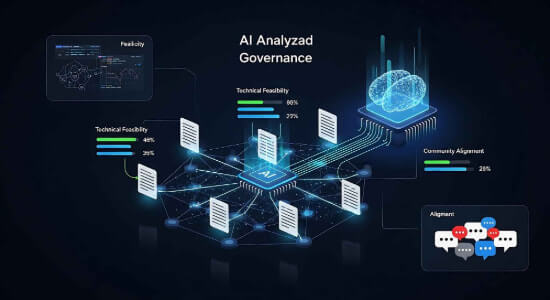
The ServiceNow Control Tower Alliance arrived with the kind of launch energy that tends to obscure the harder questions. A curated network of pretested AI partners, a unified observability layer, policy enforcement baked into the platform: the pitch is coherent and the timing is deliberate. Enterprise teams that have been deferring governance architecture decisions now have a vendor-packaged answer. The question worth asking is not whether the answer is wrong, but whether it is complete.
Companion piece to our broader work on platform dependency and AI orchestration risk. See Multi-Agent AI vs. Monolithic Models: The Future of Critical Infrastructure in 2026 for how consolidation decisions play out across distributed agent architectures.
What Centralized Control Planes Get Right
The core value proposition of a centralized control plane is not convenience. It is observability coverage at the point where most enterprise AI programs currently have a gap: the boundary between models, agents, and the downstream systems they act on. Without a unified control layer, policy enforcement tends to fragment across individual deployment teams, producing inconsistent audit trails and blind spots that only surface during incident reviews.
Alliance models extend this by pre-validating integration paths between the control plane and partner AI systems. That matters because integration quality is where governance breaks down in practice. A policy engine that cannot reliably read telemetry from a third-party agent is not enforcing policy; it is recording the absence of violations, which is a different thing entirely.
The commercial implication is real: enterprises that have tried to build governance layers on top of heterogeneous AI stacks know how much engineering time disappears into connector maintenance. Pretested integrations shift that cost from the buyer to the alliance ecosystem, which is a genuine structural advantage.
Where Ecosystem Alliances Create Concentration Risk
The same architectural property that makes a centralized control plane valuable also makes it a single point of failure. When AI discovery, observability, and policy enforcement all route through one vendor's platform, an outage or a breaking API change does not degrade governance coverage. It eliminates it. That distinction matters for enterprises with regulatory obligations that require continuous audit capability.
Alliance membership also creates a soft boundary around which AI systems receive first-class governance support. Partners inside the alliance get pretested integrations and documented policy hooks. Systems outside it get whatever the platform's generic connector layer can manage, which is typically less reliable and harder to audit. Over time, that asymmetry shapes procurement decisions in ways that may not reflect the enterprise's actual technical requirements.
The dependency risk compounds when the control plane vendor controls the policy schema. If enforcement logic is expressed in a proprietary format, migrating to a different governance layer means re-authoring policy, not just re-pointing a configuration file. That exit cost is rarely surfaced in alliance launch materials.
How to Evaluate Pretested Integrations Against Real Requirements
Pretested does not mean production-validated under your load profile, your data classification requirements, or your incident response procedures. The evaluation question is not whether the integration passed the vendor's certification suite. It is whether the telemetry the integration produces is sufficient for your compliance team to reconstruct an agent's decision sequence after the fact.
Audit Trail Depth
The minimum viable audit trail for most regulated industries is not a log of actions taken. It is a log of the inputs, the model state at decision time, and the downstream system state that was modified. Vendors rarely test for this level of trace completeness in alliance certification programs because it requires deep cooperation from the partner AI system, not just a working API handshake.
Policy Enforcement Latency
Governance enforcement that operates asynchronously is monitoring, not control. For agentic workflows where one model's output becomes another model's input within milliseconds, a policy engine that evaluates compliance after the fact cannot prevent harm. CTOs should ask specifically whether enforcement hooks are synchronous and where in the execution path they sit.
What to Demand Before Handing Orchestration to a Platform Vendor
The governance architecture conversation should happen before contract negotiation, not during it. By the time commercial terms are on the table, the leverage to demand architectural concessions has largely passed. There are four things worth establishing early.
First, confirm that policy definitions are exportable in an open format. Vendor lock-in at the policy layer is more consequential than lock-in at the model layer because policies encode compliance logic that took legal and engineering teams months to develop.
Second, require documented failure mode behavior. When the control plane is unavailable, does the governed AI system fail closed, fail open, or degrade to a reduced capability mode? The answer reveals how much the vendor has thought about governance as an operational requirement rather than a feature.
Third, ask for the incident response runbook for a governance failure. A vendor that cannot produce one has not operationalized their own platform at the level they are asking you to.
Finally, establish data residency and telemetry routing paths before deployment. Governance platforms that aggregate observability data centrally can inadvertently create cross-border data flows that conflict with GDPR or sector-specific data localization requirements.
Building a Vendor-Agnostic Evaluation Lens
The Control Tower Alliance is most useful as a forcing function. It makes the governance architecture conversation unavoidable, which is valuable for organizations that have been treating governance as a future problem. The evaluation lens that survives vendor transitions is one built around capabilities rather than products.
The capabilities that matter are: continuous audit trail generation at the agent level, synchronous policy enforcement with documented latency budgets, policy portability across control planes, and failure mode behavior that defaults to a known safe state. Any platform that satisfies those requirements, whether it is ServiceNow's or a competitor's or a custom-built internal layer, is a credible governance substrate.
The risk of vendor-led coalitions is not that they produce bad architecture. It is that they produce architecture optimized for the vendor's ecosystem rather than the enterprise's risk profile. Those two things overlap significantly in the average case and diverge precisely when the stakes are highest.
Where Vector Labs Fits
We help enterprise teams stress-test AI governance architectures before platform commitments are made, identifying coverage gaps and dependency risks that surface only under operational conditions. In our platform governance analysis, we worked through how vendor instability, unauthorized agent actions, and outage patterns translate into concrete SLA and procurement risk for engineering leaders. If you are currently evaluating centralized AI governance platforms or designing an internal governance stack, contact us at vector-labs.ai/contacts.
FAQs
It is both, and that dual nature is the point. The alliance creates genuine technical value through pretested integrations and a unified observability layer. It also creates commercial gravity that pulls procurement decisions toward ServiceNow's partner network. Evaluating it clearly requires separating the architectural capabilities from the ecosystem incentives.
Start by defining what your compliance team needs to reconstruct an agent's decision sequence after an incident. Then test whether the integration's telemetry output contains that information under realistic load conditions. Vendor certification programs typically validate connectivity and basic functionality, not audit trail completeness under your specific data classification and volume requirements.
The exit cost is proportional to the complexity of your policy library. Simple access control policies are relatively portable. Policies that encode nuanced compliance logic, approval workflows, or domain-specific risk thresholds are not. If those policies are expressed in a vendor-proprietary format, migration to a different governance layer requires re-authoring them from scratch, which typically means re-engaging legal and compliance teams as well as engineering.
The build-versus-buy decision depends on how heterogeneous your AI stack is and how much engineering capacity you can dedicate to connector maintenance. For organizations running fewer than a dozen AI systems with similar integration patterns, a platform with pretested integrations is usually more cost-effective. For organizations with complex multi-vendor stacks or strict data residency requirements, the constraints imposed by a centralized platform may outweigh the integration savings.
Policy export rights in an open format, documented SLAs for governance platform availability with defined remedies, and explicit data residency commitments for telemetry and audit data. The governance platform availability SLA is particularly important: most software contracts define uptime for the product itself, not for the governance layer specifically, which means a partial outage that affects only policy enforcement may not trigger contractual remedies.
More Articles
 8 mins read

 AI Vendor Contracts Are Being Rewritten Around You: What CTOs Must Negotiate Before Signing
A practical guide to enterprise AI vendor risk in 2026 - covering usage-based billing models replac…
Security
Oct 30, 2026
8 mins read
AI Governance Without Business Alignment Is Just Theater: What CIOs Are Getting Wrong About Control
A strategic guide to why AI governance frameworks fail when decoupled from business outcomes, cover…
Security
Sep 10, 2026
9 mins read
When AI Goes Wrong, the CIO Gets the Call: Building Executive Accountability Before the Incident Happens
A practical guide to how CIOs and senior technical leaders can get ahead of AI accountability gaps …