







When AI Acceleration Outpaces Executive Judgment: The Governance Risk Nobody Is Budgeting For

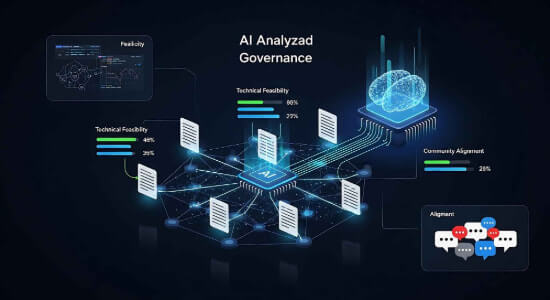
Organisations deploying agentic AI at scale are discovering an asymmetry that no architecture review anticipated: the rate at which these systems generate consequential output has begun to exceed the rate at which leadership can meaningfully evaluate it. This is not a tooling problem or a talent gap. It is a structural control problem, and it compounds quietly until it surfaces as something the board cannot ignore.
Companion piece to our broader work on AI oversight and dependency risk. See AI Dependency Risk: When Systems Exceed Human Audit for a deeper treatment of capability overhang and verification gaps in enterprise AI adoption.
The Velocity Gap Is Not a Temporary Condition
The standard assumption in enterprise AI planning is that oversight processes will catch up once teams become more familiar with the technology. That assumption does not hold when the underlying systems are designed to accelerate continuously. Agentic workflows compound output velocity by chaining decisions across tasks, tools, and time horizons without requiring a human checkpoint at each transition.
The result is a widening gap between what the system produces and what any individual executive can trace, understand, or redirect within a normal decision cycle. This gap does not close through familiarity. It widens as deployment scope expands.
What makes this structurally significant is that the gap is asymmetric. AI systems can be scaled horizontally across business functions simultaneously. Executive attention cannot. Organisations treating this as a temporary calibration problem are misreading the risk profile entirely.
How Agentic Workflows Erode Directional Oversight
Traditional software systems execute instructions. Agentic systems pursue objectives, and the distinction matters enormously for governance. When an agent is given a goal and a set of tools, the path it takes to reach that goal is often not specified, not logged in a form humans can readily interpret, and not reviewed before the action is taken.
This creates a category of consequential change that is structurally invisible to the leadership tier. Decisions about vendor interactions, customer-facing communications, internal resource allocation, and code deployment can all occur within agentic pipelines without surfacing to a human reviewer at the moment they happen. By the time a pattern becomes visible in aggregate reporting, the downstream effects are already embedded.
The governance risk here is not that agents make catastrophically wrong decisions in isolation. It is that they make many small decisions, each individually defensible, that accumulate into a strategic direction nobody explicitly chose. That is a harder problem to detect and a harder one to reverse.
The Decision Bandwidth Problem
Executive decision bandwidth is finite and largely fixed in the short term. Hiring and onboarding senior leaders who can meaningfully evaluate AI-generated output is slow. Training existing leadership to develop genuine technical fluency in agentic systems is slower still. Meanwhile, the surface area of decisions being made inside AI pipelines grows with every new workflow that goes into production.
This creates a condition we can describe precisely: the ratio of consequential AI-generated decisions to available human review capacity is increasing, and in most organisations, nobody is measuring it. That unmeasured ratio is where governance risk accumulates.
The commercial implication is direct. Organisations that cannot maintain meaningful oversight of their AI systems are also organisations that cannot confidently represent to regulators, auditors, or boards that those systems are operating within intended boundaries. That is a liability exposure, not merely a technical inconvenience.
What CTOs Need to Architect Before the Problem Becomes Structural
The answer is not to slow down AI adoption. It is to build oversight infrastructure that scales alongside deployment velocity. That means designing governance into the architecture of agentic systems from the start, not retrofitting audit mechanisms after the fact.
Decision Logging and Interpretable Audit Trails
Every agentic workflow should produce a structured record of the decisions it made, the objectives it was pursuing, and the tools it invoked. This is not the same as standard application logging. It requires deliberate design choices about what constitutes a decision boundary and how to represent the agent's reasoning in a form that a non-specialist reviewer can interrogate.
Organisations that skip this step during initial deployment consistently find that reconstructing it later requires significant re-engineering. The cost of building interpretable audit trails into a live production system is substantially higher than building them in at the design stage.
Human-in-the-Loop Thresholds
Not every agent decision warrants human review. But every deployment should have explicit, documented thresholds above which human approval is required before action is taken. These thresholds should be defined in terms of business impact, not just technical parameters.
The governance risk in most current deployments is not that thresholds are set too high. It is that thresholds are not defined at all, leaving agents to operate across an unbounded action space with no structural checkpoint. Defining those boundaries is a governance decision, not a technical one, and it belongs with the CTO and the executive team, not with the engineering team alone.
Oversight Capacity as a Budgeted Resource
Governance capacity needs to appear in the resource plan alongside compute and headcount. If an organisation is deploying ten new agentic workflows in a quarter, the question of who will review their outputs, how often, and using what tools should be answered before deployment, not after. Treating oversight as an implicit responsibility that falls to whoever has time is how oversight stops happening.
Reframing This as a Board-Level Risk
The framing that tends to get traction at board level is cybersecurity. Boards understand that unreviewed access to consequential systems creates liability. The governance risk from agentic AI is structurally analogous: it is the risk that consequential decisions are being made inside systems that leadership cannot adequately inspect, redirect, or account for.
CTOs who wait for a visible incident before making this case will find themselves in a reactive position. The more productive approach is to quantify the current oversight gap, present it in terms of decision volume versus review capacity, and propose a governance architecture that closes it before it becomes a board-level event. That framing converts an abstract risk into a concrete engineering and resourcing problem, which is a problem organisations know how to solve.
Where Vector Labs Fits
We build production AI systems with governance and auditability requirements treated as first-class design constraints, not afterthoughts. In our cybersecurity governance analysis, we examined how the absence of structured decision oversight in AI-driven incident response creates the same class of control-loss risk described in this article. If you are mapping the oversight gap in your current agentic deployments, contact us at vector-labs.ai/contacts.
FAQs
Standard software executes predefined instructions, so the action space is bounded and auditable in advance. Agentic systems pursue objectives across variable action sequences, meaning the specific decisions they make are not fully specified at design time. This makes pre-approval of actions structurally impossible and shifts the governance requirement toward real-time monitoring and threshold-based intervention rather than upfront review of logic.
Thresholds should be defined in terms of business impact categories rather than technical parameters alone. Useful dimensions include financial exposure per decision, reversibility of the action, external visibility (customer or regulatory facing), and data sensitivity. Each agentic workflow should have a documented threshold matrix that maps action types to required approval levels, and that matrix should be reviewed by the CTO and relevant business owners, not set unilaterally by the engineering team.
Partially. The tooling for capturing agent traces, tool invocations, and decision sequences has matured significantly, and frameworks such as LangSmith and similar observability layers provide useful foundations. The harder problem is designing the logging schema so that non-specialist reviewers can extract meaningful signal from it without requiring deep familiarity with the underlying model architecture. That design work is not automated and requires deliberate investment at the system design stage.
The most effective framing is liability exposure rather than productivity trade-off. Boards and CFOs respond to the question of what happens when an agentic system makes a consequential error that leadership cannot explain, trace, or demonstrate was within sanctioned boundaries. Regulatory exposure, reputational risk, and audit failure are all downstream consequences of inadequate oversight architecture, and quantifying those risks in financial terms tends to move the conversation faster than abstract arguments about governance best practice.
Before production deployment, without exception. Retrofitting audit trails, approval workflows, and oversight thresholds into a live agentic system is significantly more expensive and disruptive than building them in at the design stage. The practical approach is to treat governance requirements as part of the system specification from the first architecture review, alongside performance, latency, and cost constraints. Organisations that defer this work consistently find that the cost of remediation scales with the number of workflows already in production.
More Articles
 7 mins read

 When AI Rewrites Scientific Workflows: What Research-Facing Engineering Leaders Need to Decide Now
A strategic guide for technical leaders navigating AI's expanding role in knowledge-intensive disci…
Security
Oct 30, 2026
8 mins read
AI Governance Without Business Alignment Is Just Theater: What CIOs Are Getting Wrong About Control
A strategic guide to why AI governance frameworks fail when decoupled from business outcomes, cover…
Enterprise Architecture
Oct 04, 2026
8 mins read
Why AI Modernization Programs Stall Before They Ship: The Operational Risk CIOs Are Not Pricing In
A practical guide to sequencing AI infrastructure modernization without operational collapse - cove…