











AI Governance Is a Security Problem: How to Build a Risk Program That Keeps Pace With Adoption

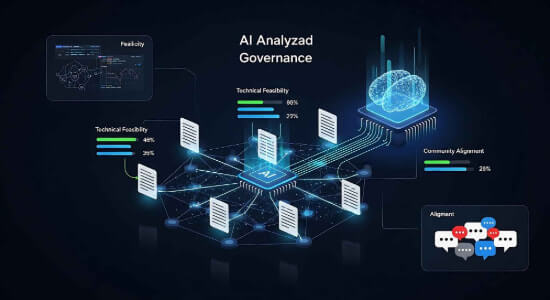
Enterprise AI governance has a framing problem. Most organisations approach it as a compliance exercise, assigning it to legal or ethics teams who produce policy documents that engineers never read and procurement teams never enforce. The practitioners who are actually containing AI risk in production environments are not doing it that way. They are building governance inside existing security and risk programs, using the same discovery, classification, and control frameworks they already apply to data and infrastructure. This article explains why that architecture is the right one, and what it needs to look like before regulators define it for you.
AI Systems Are an Unmanaged Attack Surface
The first reason to treat AI governance as a security problem is definitional. Every AI system your organisation deploys or consumes introduces a new surface for failure: model drift, data poisoning, prompt injection, and supply chain risk from third-party model providers. These are not ethics concerns. They are security concerns, and they belong in the same program that manages your cloud posture and your software bill of materials.
The discovery gap is where most programs fail first. Security teams typically maintain an inventory of applications, APIs, and data stores, but AI systems fall outside those categories in ways that matter. A fine-tuned model embedded in a SaaS product, a retrieval-augmented generation pipeline built by a product team, and a third-party inference API called from a customer-facing workflow are all AI systems. Without a deliberate discovery process, none of them appear in your risk register.
The practical fix is to extend your existing asset inventory to include AI systems as a first-class category, with attributes that matter for risk: model type, training data provenance, inference environment, human-in-the-loop status, and the sensitivity of the decisions the system influences. This is not a new framework. It is the same asset classification logic your security team already applies, applied to a new class of asset.
Calibrating Risk Tolerance Before You Need It
Risk tolerance for AI systems cannot be set at the program level and left there. Different systems carry fundamentally different risk profiles, and the tolerance for a content recommendation model is not the same as the tolerance for a model influencing credit decisions or clinical workflows. Getting this wrong in either direction is expensive: over-restriction slows adoption, and under-restriction produces incidents that are harder to explain to a board than a data breach.
The calibration process should be anchored to two variables: the reversibility of the system's outputs and the breadth of its impact. A model whose outputs are reviewed by a human before any action is taken carries lower residual risk than one that acts autonomously at scale. A system that affects a narrow internal workflow carries lower residual risk than one that touches customer-facing decisions. Mapping these two dimensions gives you a defensible basis for tiering systems and assigning control requirements proportionate to actual risk.
This tiering logic is also what regulators are converging on. The EU AI Act's prohibited and high-risk classifications, NIST AI RMF's impact categories, and ISO 42001's risk-based management approach all rest on a similar underlying logic. Building your internal tiering now means you are not starting from scratch when compliance obligations become binding.
Communicating AI Risk to Stakeholders Without Losing Credibility
Security leaders who communicate AI risk in technical terms lose their audience. Security leaders who communicate it in abstract ethical terms lose their credibility. The framing that works with boards and C-suites is operational: what decisions does this system influence, what happens when it is wrong, and what controls exist to detect and contain that failure.
This requires translating model-level concepts into business-level consequences. A model with a four percent error rate on a low-stakes classification task is a quality issue. The same error rate on a system making hiring or lending decisions is a legal and reputational liability. The difference is not the error rate. It is the consequence of the error, and that is the unit of communication that resonates with non-technical stakeholders.
The governance program also needs a credible escalation path. When a risk is identified, stakeholders need to know who owns the decision to accept, mitigate, or halt a system, and what evidence standard that decision requires. Without that path, risk communication becomes a reporting exercise rather than a control mechanism.
Building for the Regulatory Landscape That Is Already Here
The EU AI Act is in force. ISO 42001 is published and being adopted by organisations that want a certifiable management system for AI risk. NIST AI RMF is the reference framework for US federal procurement and is influencing private sector expectations. These are not future considerations. They are current requirements for any organisation operating at scale in regulated industries or across jurisdictions.
EU AI Act
The Act's high-risk categories cover AI systems used in employment, credit, critical infrastructure, and several other domains that most large enterprises already operate in. The compliance obligations for high-risk systems include conformity assessments, technical documentation, human oversight requirements, and post-market monitoring. These are security and risk program functions. They are not legal functions, and they will not be delivered effectively if they sit only in legal.
ISO 42001
ISO 42001 provides a management system structure for AI governance that maps closely to ISO 27001. Organisations that have already built an information security management system have a significant head start. The control categories, audit logic, and continual improvement requirements are structurally similar. The practical path for most enterprises is to extend their existing ISMS scope rather than build a parallel governance structure.
NIST AI RMF
The NIST AI RMF organises AI risk management across four functions: Govern, Map, Measure, and Manage. These map directly onto the capabilities a mature security program already has: policy and accountability structures, asset and risk mapping, measurement and testing, and incident response. The framework is designed to be integrated, not siloed, and that integration is most natural inside an existing security and risk function.
The Governance Architecture That Actually Scales
A governance program that lives in a policy document does not scale. One that is embedded in the systems and processes engineers actually use does. The practical architecture has three layers: discovery and classification running continuously as part of your asset management process, risk assessment triggered at deployment and at defined review intervals, and control enforcement integrated into your existing security tooling and change management gates.
The discovery layer is the hardest to sustain because AI systems are created faster than governance processes typically move. The solution is to make AI system registration a condition of deployment, enforced through the same gates that govern software releases and infrastructure changes. This is not a cultural intervention. It is a process control, and process controls are what security teams know how to build.
The risk assessment layer needs to be lightweight enough that teams actually complete it. A tiered questionnaire that routes systems into low, medium, and high-risk categories, with proportionate documentation and control requirements for each tier, is more effective than a comprehensive assessment that creates bottlenecks and gets bypassed under delivery pressure. The goal is coverage, not perfection on any single assessment.
Companion piece to our broader work on AI governance architecture. See AI Governance Fails When Engineers Feel Pressured for a detailed analysis of why governance frameworks break down under competitive pressure and how technical leaders can build controls that engineers will actually follow.
Where Vector Labs Fits
We build AI systems with governance and regulatory compliance structured into the development process from the outset, not retrofitted after deployment. In our cardiovascular certification work, this approach produced a custom deep learning system that achieved clinical-grade accuracy on wearable ECG data and received Class 2A medical device certification, delivered within the product launch timeline. If you are building AI systems that need to meet regulatory standards without slowing down your roadmap, contact us at vector-labs.ai/contacts.
FAQs
For most enterprises, embedding AI governance inside the existing security and risk function is the right starting point. Security teams already have the asset management, risk assessment, and control enforcement infrastructure that AI governance requires. A separate function tends to produce policy documents without enforcement mechanisms. The exception is organisations where AI is core to the product, where a dedicated AI risk function with a direct reporting line into security may be warranted.
Third-party AI systems should go through the same discovery and classification process as internally built ones. The risk is not diminished because you did not build the model. Your vendor risk management process should be extended to capture AI-specific attributes: model type, training data provenance, the vendor's own governance practices, and contractual obligations around transparency and incident notification. For high-risk use cases, you should require evidence of the vendor's conformity with applicable frameworks before deployment.
For high-risk AI systems, the Act requires technical documentation, a conformity assessment, human oversight mechanisms, post-market monitoring, and incident reporting obligations. From a security team's perspective, this maps to documentation standards in your SDLC, testing and validation gates before deployment, monitoring instrumentation in production, and an incident response process that covers AI-specific failure modes. The Act does not prescribe specific technical controls, which means your existing control frameworks are the right starting point for gap analysis.
Start with systems that influence consequential decisions at scale: anything touching hiring, lending, customer eligibility, clinical pathways, or public-facing content at volume. These are the systems most likely to fall into EU AI Act high-risk categories and most likely to produce material incidents if they fail. After that, prioritise systems with no human review in the decision loop, since autonomous operation at scale is where failure propagates fastest and is hardest to contain.
ISO 42001 certification has genuine operational value for organisations that need to demonstrate AI governance maturity to enterprise customers, regulators, or procurement processes. The management system structure forces you to document, audit, and continuously improve your AI risk practices in ways that internal programs often avoid. For organisations already holding ISO 27001, the incremental effort is lower than it appears, since the audit and management review structures are directly transferable. Whether certification is commercially necessary depends on your customer base and the regulatory environment you operate in.
More Articles
 9 mins read

 The Race Dynamic Your Compliance Team Is Ignoring: Why AI Governance Frameworks Fail When Engineers Feel They Have No Choice
A practitioner guide to why AI policy and internal governance structures break down at the team lev…
Security
Sep 18, 2026
9 mins read
Cost Exhaustion, Agent Swarms, and Evidence Custodians: The AI Risk Categories Your Governance Framework Is Not Built For
A strategic guide to the emerging operational and governance risks Gartner has flagged for 2027-203…
Security
Sep 08, 2026
10 mins read
Voluntary by Default: What the Collapse of Binding AI Oversight Means for Enterprise Compliance Strategy
A strategic guide for enterprise technical leaders on how to build internal AI governance architect…
The Race Dynamic Your Compliance Team Is Ignoring: Why AI Governance Frameworks Fail When Engineers Feel They Have No Choice
A practitioner guide to why AI policy and internal governance structures break down at the team lev…
Security
Sep 18, 2026
9 mins read
Cost Exhaustion, Agent Swarms, and Evidence Custodians: The AI Risk Categories Your Governance Framework Is Not Built For
A strategic guide to the emerging operational and governance risks Gartner has flagged for 2027-203…
Security
Sep 08, 2026
10 mins read
Voluntary by Default: What the Collapse of Binding AI Oversight Means for Enterprise Compliance Strategy
A strategic guide for enterprise technical leaders on how to build internal AI governance architect…