







GRC Engineering Is Not a Compliance Project: What Technical Leaders Need to Build Before Regulators Catch Up

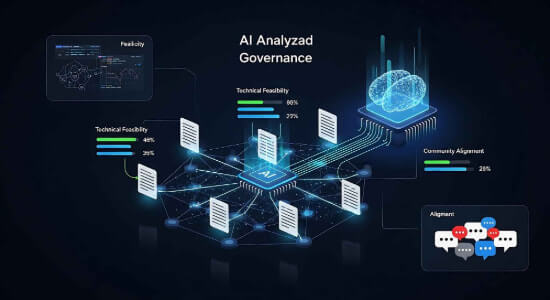
Most technical leaders treat AI governance as something that happens after the system is built. A policy team writes a framework, legal reviews it, and engineering gets a memo. That model made sense when AI was a feature. It does not make sense when AI is the product, the pipeline, and increasingly the decision-maker. The argument here is direct: governance, risk, and compliance for AI systems is an infrastructure problem, and the teams that treat it as one now will have a structural advantage over those who scramble to retrofit it when regulatory frameworks mature.
Companion piece to our broader work on AI accountability architecture. See Who Owns the AI Mistake? Building an Accountability Architecture Before Regulators Force Your Hand for practical role definitions, incident ownership models, and how to embed accountability into the AI development lifecycle before external mandates arrive.
The Compliance Team Cannot Own This
When governance is owned by a compliance function, it operates on a different clock than engineering. Policy documents are updated quarterly. Deployment pipelines run daily. That mismatch is not a coordination problem. It is an architectural one.
The deeper issue is that compliance teams rarely have visibility into the artefacts that actually determine AI system behaviour. They see the model card, not the training data lineage. They review the policy, not the prompt template that diverges from it in production. Governance built outside the engineering stack will always be reviewing a representation of the system, not the system itself.
This is why GRC engineering is a distinct discipline. It applies the same principles engineers use for security and observability, continuous instrumentation, version control, and automated enforcement, to the governance layer of AI systems.
What Compliance-as-Code Actually Changes
Compliance-as-code is not a documentation strategy. It is a shift in where enforcement happens. When governance rules are expressed as code, they can be tested in CI/CD pipelines, versioned alongside model changes, and triggered automatically when a deployment crosses a defined threshold.
The accountability implication is significant. When a governance check is a policy document, a human must read it, interpret it, and decide whether it applies. When it is a code artefact, it either passes or fails. That distinction matters enormously when a regulator asks who verified that a model met a fairness criterion before it was deployed to production.
Tools like Cursor and Codex are already changing how engineers interact with governance requirements. When a developer is writing a data preprocessing step, a governance-aware coding assistant can surface relevant constraints inline, before the code is committed, not after it is audited. That is not a compliance shortcut. It is moving enforcement left in the development lifecycle, which is the same principle that made security-as-code effective.
The Audit Trail Is an Engineering Artefact
Regulators across jurisdictions are converging on one consistent requirement: explainability and traceability. They want to know what data trained a model, what evaluation criteria were applied, and what changed between versions. These are not documentation questions. They are data engineering questions.
Building a compliant audit trail means instrumenting the model development lifecycle from the start. That includes lineage tracking for training datasets, versioned evaluation reports tied to model releases, and structured logs of human-in-the-loop decisions where they exist. None of this can be reconstructed reliably after the fact.
The teams that will handle regulatory scrutiny well are the ones whose audit trails are a natural output of their development process, not a separate artefact assembled under pressure. That requires treating the audit trail as a first-class engineering deliverable from the first sprint, not a reporting requirement that arrives with the compliance audit.
Building the GRC Stack Into Developer Tooling
Governance Gates in the Deployment Pipeline
The most direct implementation of GRC engineering is adding governance gates to deployment pipelines. These are automated checks that verify a model release against defined criteria before it reaches production. The criteria might include bias evaluation thresholds, data provenance attestations, or sign-off requirements for high-risk use cases.
This is structurally identical to how mature engineering teams handle security scanning or dependency audits. The gate does not replace human judgment. It ensures that human judgment was applied and recorded at the right point in the process.
AI-Assisted Policy Interpretation at the Point of Development
The more sophisticated layer is using AI coding assistants to surface governance constraints at the point where code is written. When an engineer is building a feature that processes personal data, the assistant can flag the relevant data handling requirements in context. When a prompt template is being modified, it can check whether the change falls within the boundaries defined by the model's deployment policy.
This requires that governance requirements are machine-readable in the first place. That is a non-trivial authoring challenge, but it is the right problem to solve. Governance requirements that exist only in prose cannot be enforced programmatically. Translating them into structured, queryable artefacts is foundational work that compounds in value as the regulatory environment becomes more prescriptive.
Risk Tiering as a Routing Mechanism
Not every AI system carries the same regulatory exposure. A recommendation engine and a credit decision model require different governance depth. GRC engineering should include a risk tiering system that routes development artefacts through the appropriate level of scrutiny automatically.
When risk tier is determined by the system's characteristics rather than by someone remembering to ask, governance coverage becomes consistent. Engineers do not need to know which regulatory framework applies. The infrastructure routes the work to the right process based on the classification of the system being built.
What to Architect Before the Regulatory Window Closes
Regulatory frameworks for AI are not stable yet, but they are converging. The EU AI Act has established a risk-based classification model that other jurisdictions are studying. Sector-specific guidance from financial regulators and medical device authorities is already more prescriptive than most engineering teams have absorbed.
The window to build GRC infrastructure proactively is narrowing. Teams that wait for final regulatory text before designing their governance stack will face the same problem that organisations faced with GDPR: a hard deadline, a complex retrofit, and a compliance posture built on documentation rather than engineering.
The architecture decisions that matter most right now are the ones that determine whether governance data is a natural output of your development process or an afterthought. That means investing in data lineage tooling, structured evaluation frameworks, and machine-readable policy artefacts now, before the specific regulatory requirements are fully settled.
The goal is not to predict exactly what regulators will require. It is to build a system that can answer questions about what your AI does, why it does it, and who verified that it was appropriate. That is a tractable engineering problem. It becomes significantly harder to solve under regulatory deadline pressure.
Where Vector Labs Fits
We build AI systems with governance and certification requirements embedded from the first design decision, not retrofitted at the end. In our cardiovascular certification work, we structured validation from the outset to meet medical device software standards, achieving Class 2A certification and clinical-grade accuracy on wearable ECG data within the product launch timeline. If you are designing AI systems that will face regulatory scrutiny and want to build the governance layer into the engineering stack from the start, contact us at vector-labs.ai/contacts.
FAQs
GRC engineering applies software engineering principles, version control, automated testing, and continuous instrumentation, to governance, risk, and compliance requirements. Traditional compliance relies on policy documents reviewed by humans at intervals. GRC engineering embeds enforcement into the development pipeline so that governance checks run automatically at the point where code is written and deployed, producing auditable records as a natural output of the process rather than a separate documentation exercise.
AI coding assistants can surface governance constraints at the point of development when those constraints are expressed in machine-readable form. An assistant can flag data handling requirements when an engineer writes a preprocessing step, or check whether a prompt template change falls within a model's deployment policy. This moves enforcement left in the development lifecycle, which reduces the gap between what governance policy says and what code actually does.
Start with data lineage and model versioning, because these are the artefacts regulators most consistently ask for and the hardest to reconstruct after the fact. Then add structured evaluation frameworks that produce versioned reports tied to model releases. Risk tiering logic that routes systems through appropriate governance depth comes next. Governance gates in the deployment pipeline are the final layer, and they depend on the earlier artefacts being in place.
Yes, because the underlying questions regulators ask are consistent even when the specific requirements are not yet settled. Traceability, explainability, and documented human oversight are present across the EU AI Act, financial services AI guidance, and medical device software standards. Building infrastructure that can answer those questions puts you in a position to adapt to specific requirements as they mature, rather than building from scratch under deadline pressure.
Risk tiering should be determined by the characteristics of the system, specifically its decision authority, the sensitivity of the data it processes, and the population affected, rather than by use case label alone. When tier classification is built into the system metadata and triggers routing automatically, engineers do not need to make individual judgments about which regulatory framework applies. The infrastructure handles routing, and humans review the outputs at the appropriate level of scrutiny for each tier.
More Articles
 8 mins read

 When AI Acceleration Outpaces Executive Judgment: The Governance Risk Nobody Is Budgeting For
A strategic guide to the emerging control-loss problem in AI-accelerated organisations - covering t…
Enterprise Architecture
Nov 03, 2026
8 mins read
The Regulatory Reset Is Coming: What the Post-Midterm AI Policy Shift Means for Enterprise Technical Strategy
A practical guide for technical leaders on how the post-midterm AI policy realignment - covering Op…
Product Management
Nov 03, 2026
8 mins read
Why Open Source Infrastructure Projects Ship Governance Before Features: Lessons for Enterprise AI Platforms
A strategic analysis of how mature open source projects like Apache Iceberg and OpenSearch embed co…